
Two policemen came on the bus, and one asked me if the driver had told me to stand. He wanted to know why I didn’t stand, and I told him I didn’t think I should have to stand up. I asked him, why did they push us around? He said, I don’t know, but the law is the law and you are under arrest.
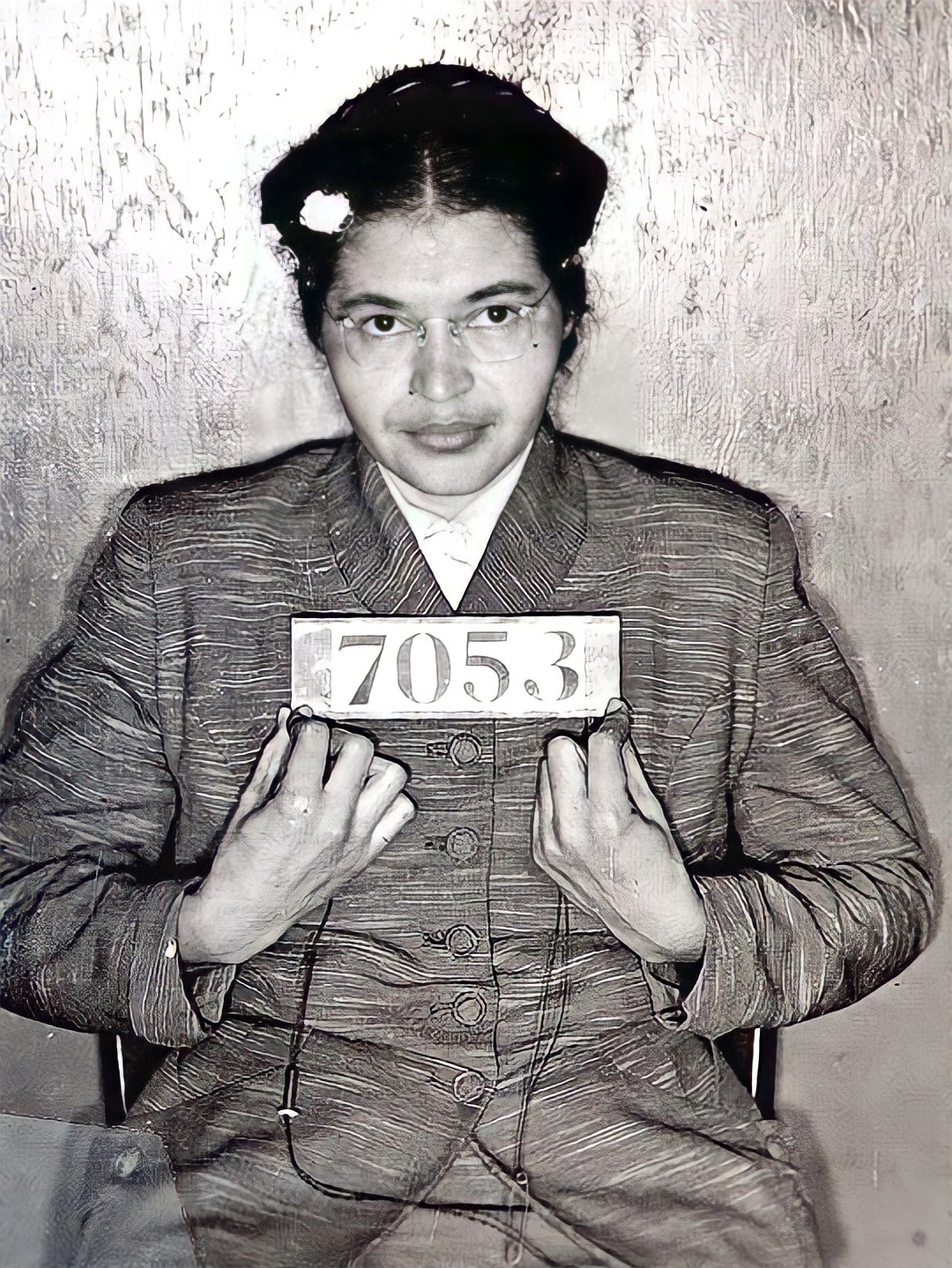
Most historians date the beginning of the modern civil rights movement in the United States to December 1, 1955. That was the day when an unknown seamstress in Montgomery, Alabama refused to give up her bus seat to a white passenger. This brave woman, Rosa Parks, was arrested and fined for violating a city ordinance, but her lonely act of defiance began a movement that ended legal segregation in America, and made her an inspiration to freedom-loving people everywhere.
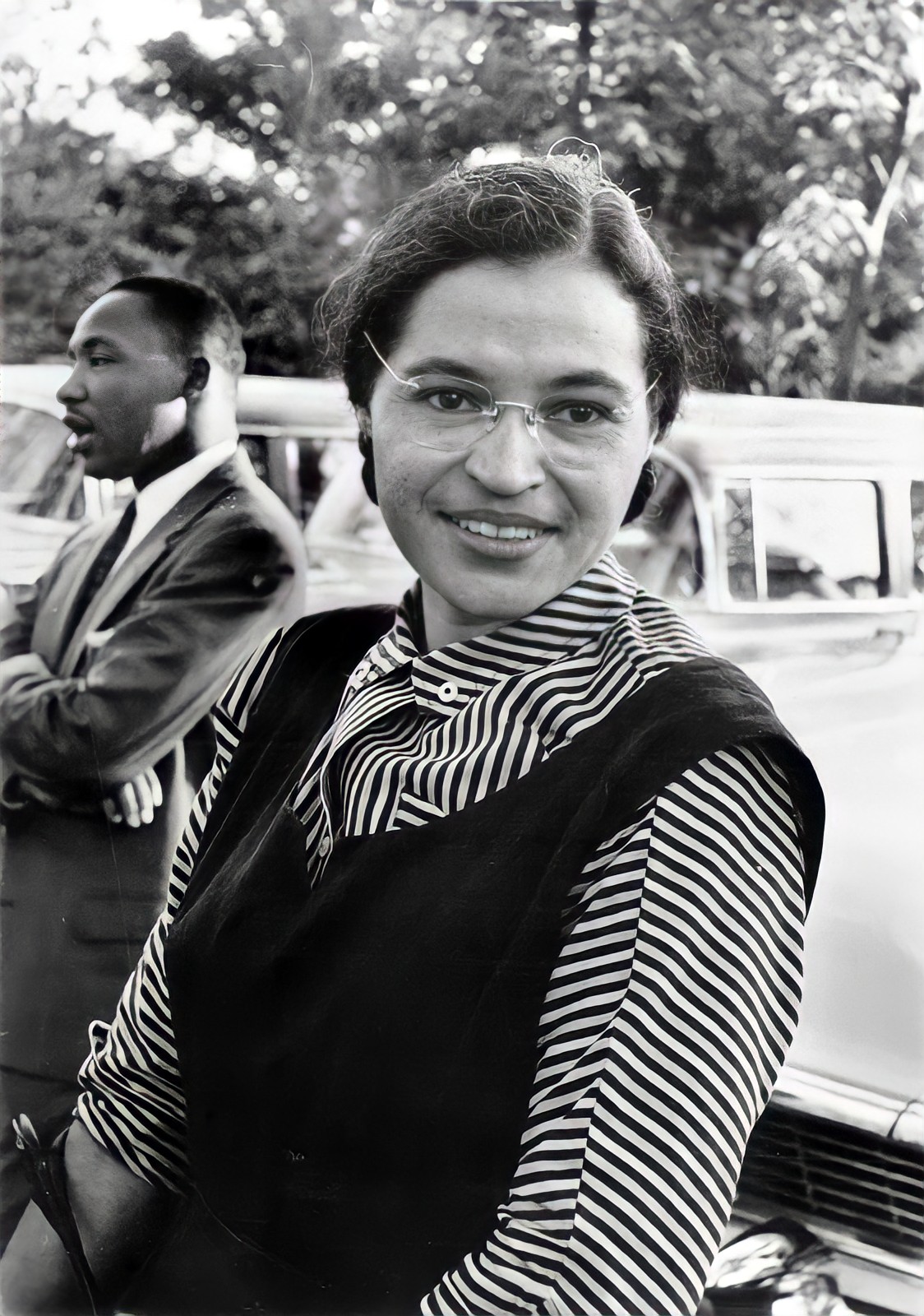
Rosa Parks was born Rosa Louise McCauley in Tuskegee, Alabama to James McCauley, a carpenter, and Leona McCauley, a teacher. At the age of two she moved to her grandparents’ farm in Pine Level, Alabama with her mother and younger brother, Sylvester. At the age of 11 she enrolled in the Montgomery Industrial School for Girls, a private school founded by liberal-minded women from the northern United States.
The school’s philosophy of self-worth was consistent with Leona McCauley’s advice to “take advantage of the opportunities, no matter how few they were.” Opportunities were few indeed. “Back then,” Mrs. Parks recalled in an interview, “we didn’t have any civil rights. It was just a matter of survival, of existing from one day to the next. I remember going to sleep as a girl hearing the Klan ride at night and hearing a lynching and being afraid the house would burn down.” In the same interview, she cited her lifelong acquaintance with fear as the reason for her relative fearlessness in deciding to appeal her conviction during the bus boycott. “I didn’t have any special fear,” she said. “It was more of a relief to know that I wasn’t alone.” After attending Alabama State Teachers College, the young Rosa settled in Montgomery, with her husband, Raymond Parks. The couple joined the local chapter of the NAACP and worked quietly for many years to improve the lot of African Americans in the segregated South.
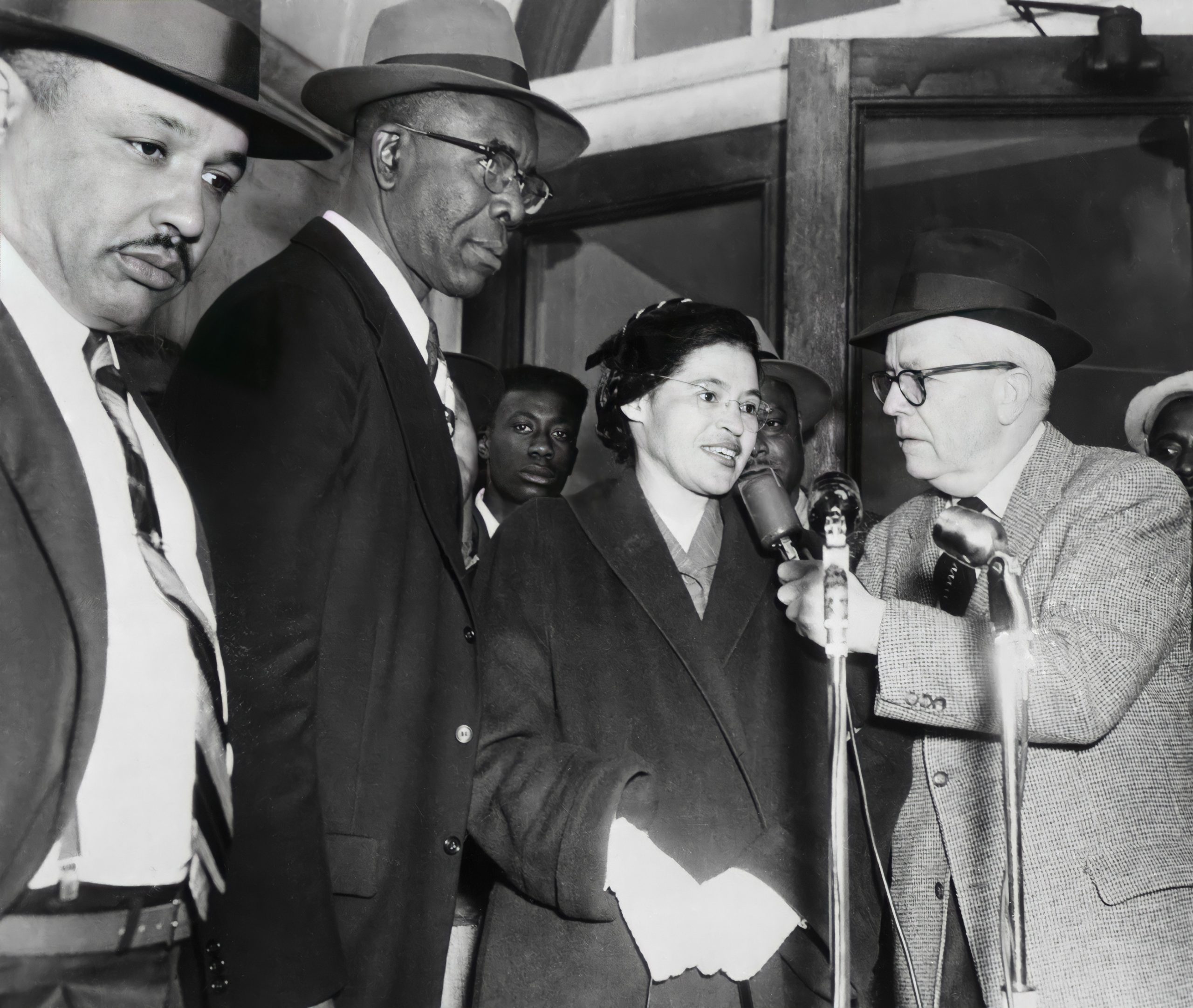
“I worked on numerous cases with the NAACP,” Mrs. Parks recalled, “but we did not get the publicity. There were cases of flogging, peonage, murder, and rape. We didn’t seem to have too many successes. It was more a matter of trying to challenge the powers that be, and to let it be known that we did not wish to continue being second-class citizens.”
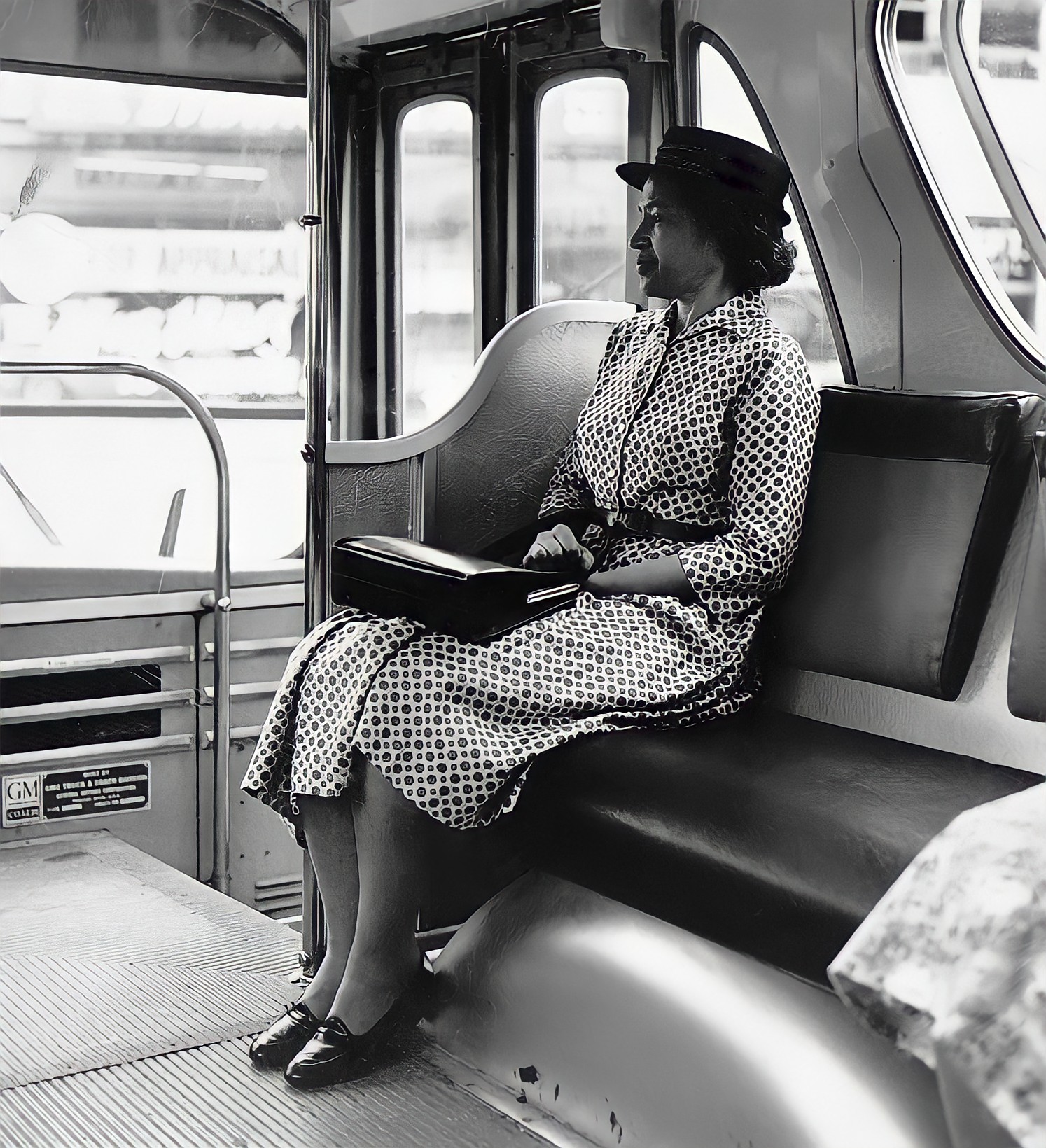
The bus incident led to the formation of the Montgomery Improvement Association, led by the young pastor of the Dexter Avenue Baptist Church, Dr. Martin Luther King, Jr. The association called for a boycott of the city-owned bus company. The boycott lasted 381 days and brought Mrs. Parks, Dr. King, and their cause to the attention of the world. A Supreme Court decision struck down the Montgomery ordinance under which Mrs. Parks had been fined, and outlawed racial segregation on public transportation.
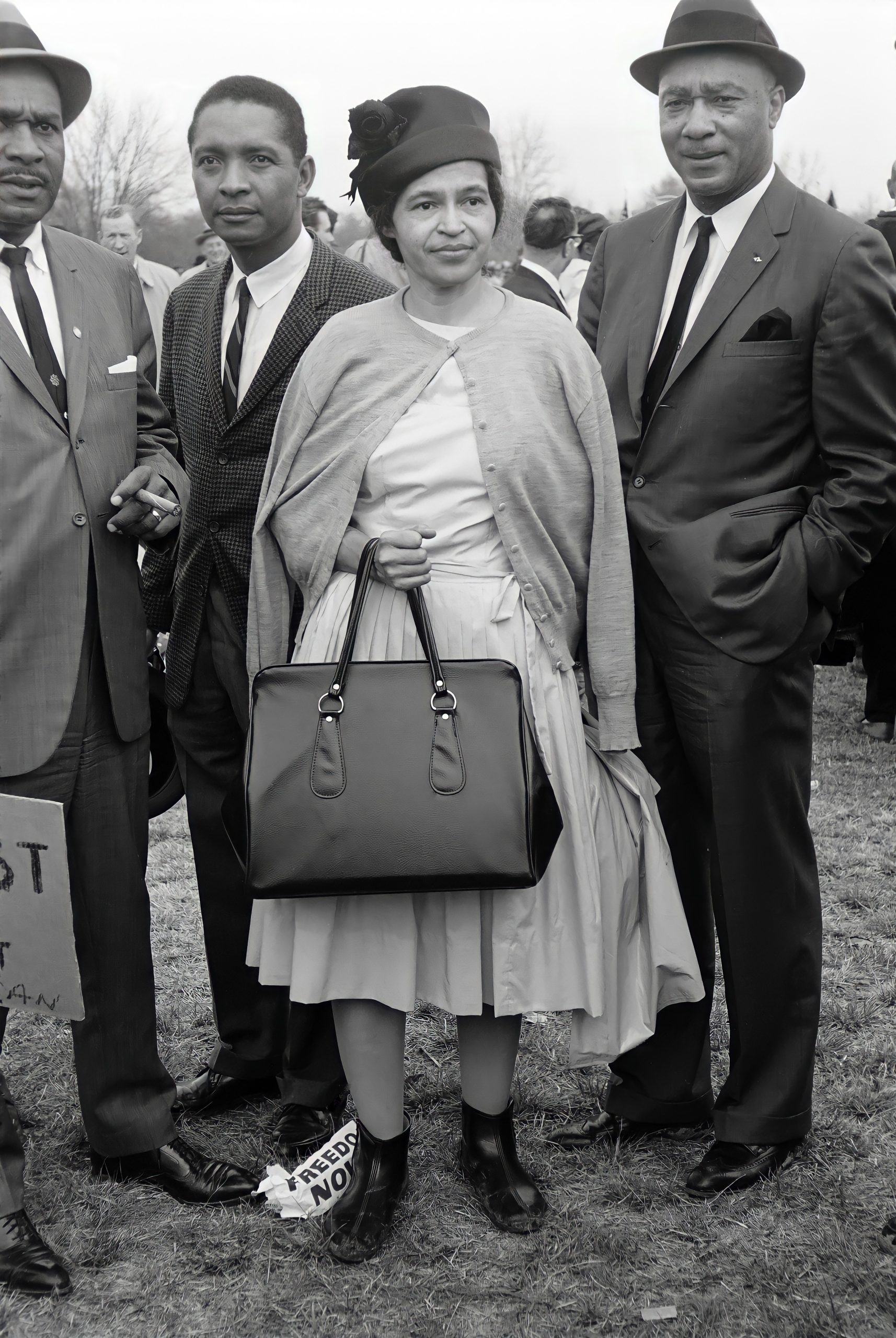
In 1957, Mrs. Parks and her husband moved to Detroit, Michigan, where Mrs. Parks served on the staff of U.S. Representative John Conyers. The Southern Christian Leadership Council established an annual Rosa Parks Freedom Award in her honor.
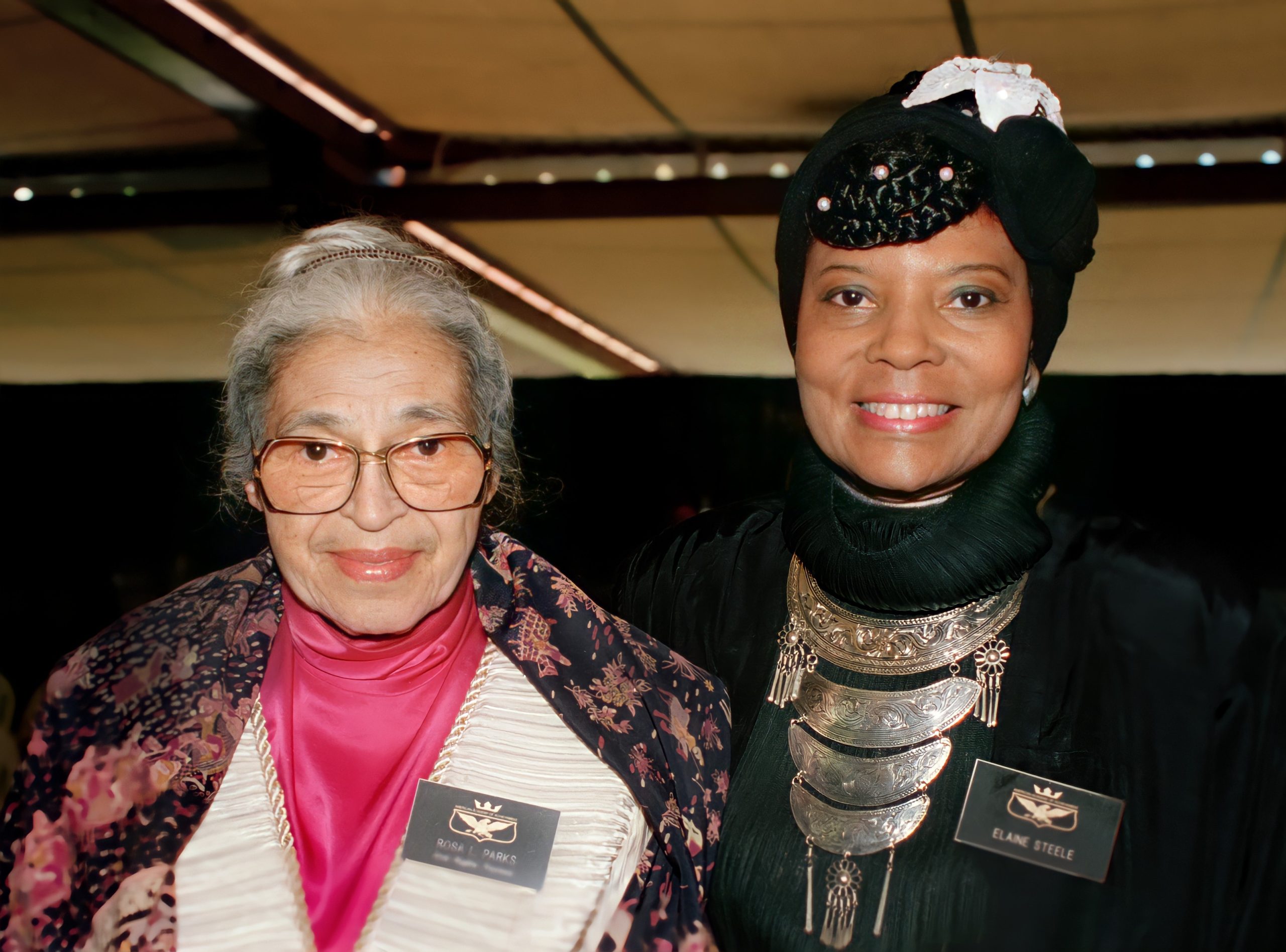
After the death of her husband in 1977, Mrs. Parks founded the Rosa and Raymond Parks Institute for Self-Development. The Institute sponsors an annual summer program for teenagers called Pathways to Freedom. The young people tour the country in buses, under adult supervision, learning the history of their country and of the civil rights movement. President Clinton presented Rosa Parks with the Presidential Medal of Freedom in 1996. She received a Congressional Gold Medal in 1999.
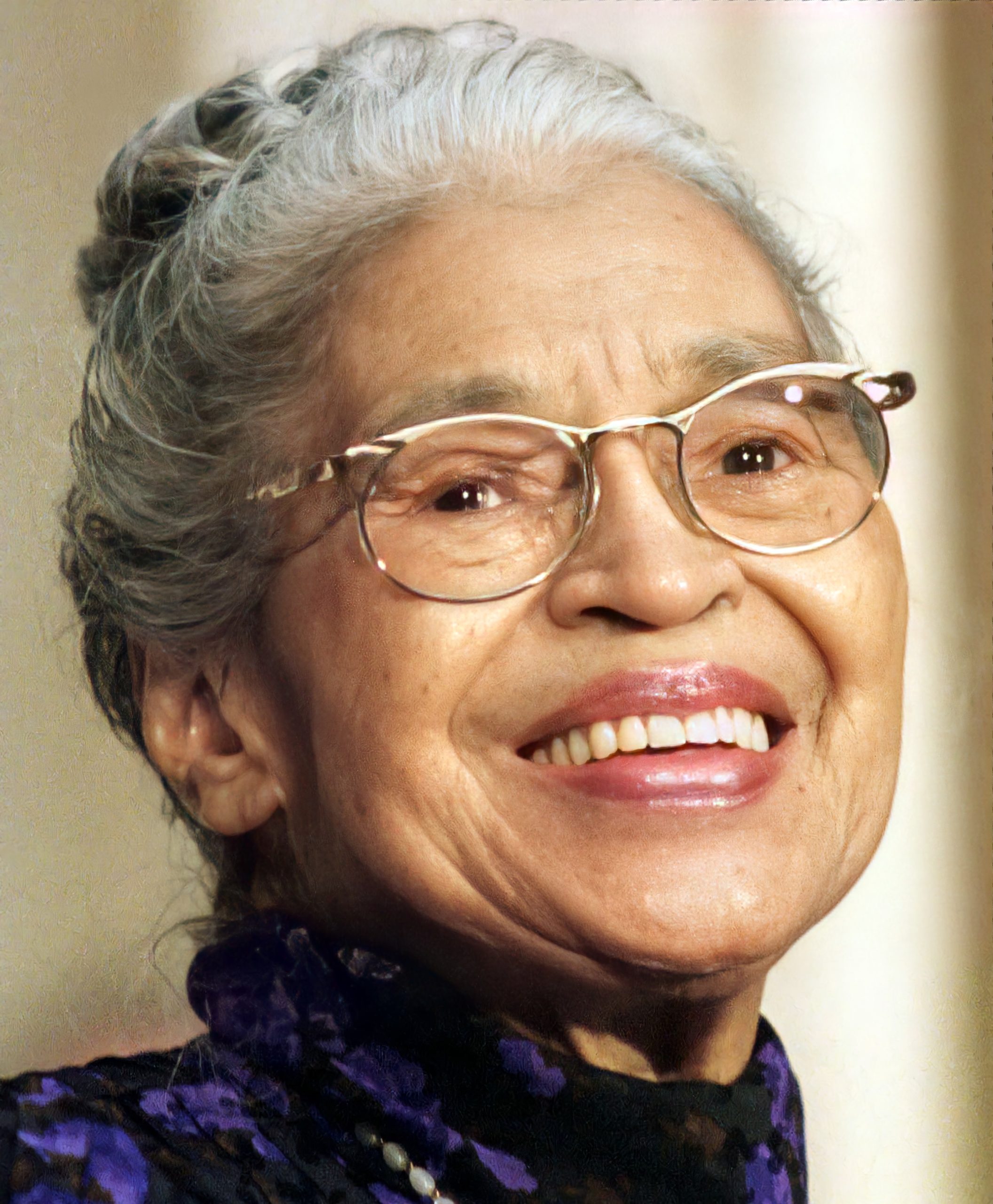
When asked if she was happy living in retirement, Rosa Parks replied, “I do the very best I can to look upon life with optimism and hope and looking forward to a better day, but I don’t think there is any such thing as complete happiness. It pains me that there is still a lot of Klan activity and racism. I think when you say you’re happy, you have everything that you need and everything that you want, and nothing more to wish for. I haven’t reached that stage yet.”
Mrs. Parks spent her last years living quietly in Detroit, where she died in 2005 at the age of 92. After her death, her casket was placed in the rotunda of the United States Capitol for two days, so the nation could pay its respects to the woman whose courage had changed the lives of so many. She was the first woman and the second African American to lie in honor at the Capitol, a distinction usually reserved for Presidents of the United States.
View and listen to Dr. Martin Luther King, Jr.’s historic “I Have a Dream” speech, delivered on the steps of Lincoln Memorial in Washington, D.C., August 28, 1963.
Member of the American Academy of Achievement, poet and best-selling author, Maya Angelou shares her interpretation of Dr. Martin Luther King’s “I Have a Dream” speech.

Rosa Parks, the “Mother of the Civil Rights Movement” was one of the most important citizens of the 20th century. Mrs. Parks was a seamstress in Montgomery, Alabama when, in December of 1955, she refused to give up her seat on a city bus to a white passenger. The bus driver had her arrested. She was tried and convicted of violating a local ordinance.
Her act sparked a citywide boycott of the bus system by blacks that lasted more than a year. The boycott raised an unknown clergyman named Martin Luther King, Jr., to national prominence and resulted in the U.S. Supreme Court decision outlawing segregation on city buses. Over the next four decades, she helped make her fellow Americans aware of the history of the civil rights struggle. This pioneer in the struggle for racial equality was the recipient of innumerable honors, including the Martin Luther King Jr. Nonviolent Peace Prize and the Presidential Medal of Freedom. Her example remains an inspiration to freedom-loving people everywhere.
In 1955, you refused to give up your seat to a white passenger on a public bus in Montgomery, Alabama. Your act inspired the Montgomery Bus Boycott, the event historians call the beginning of the modern Civil Rights Movement. Could you tell us exactly what happened that day?
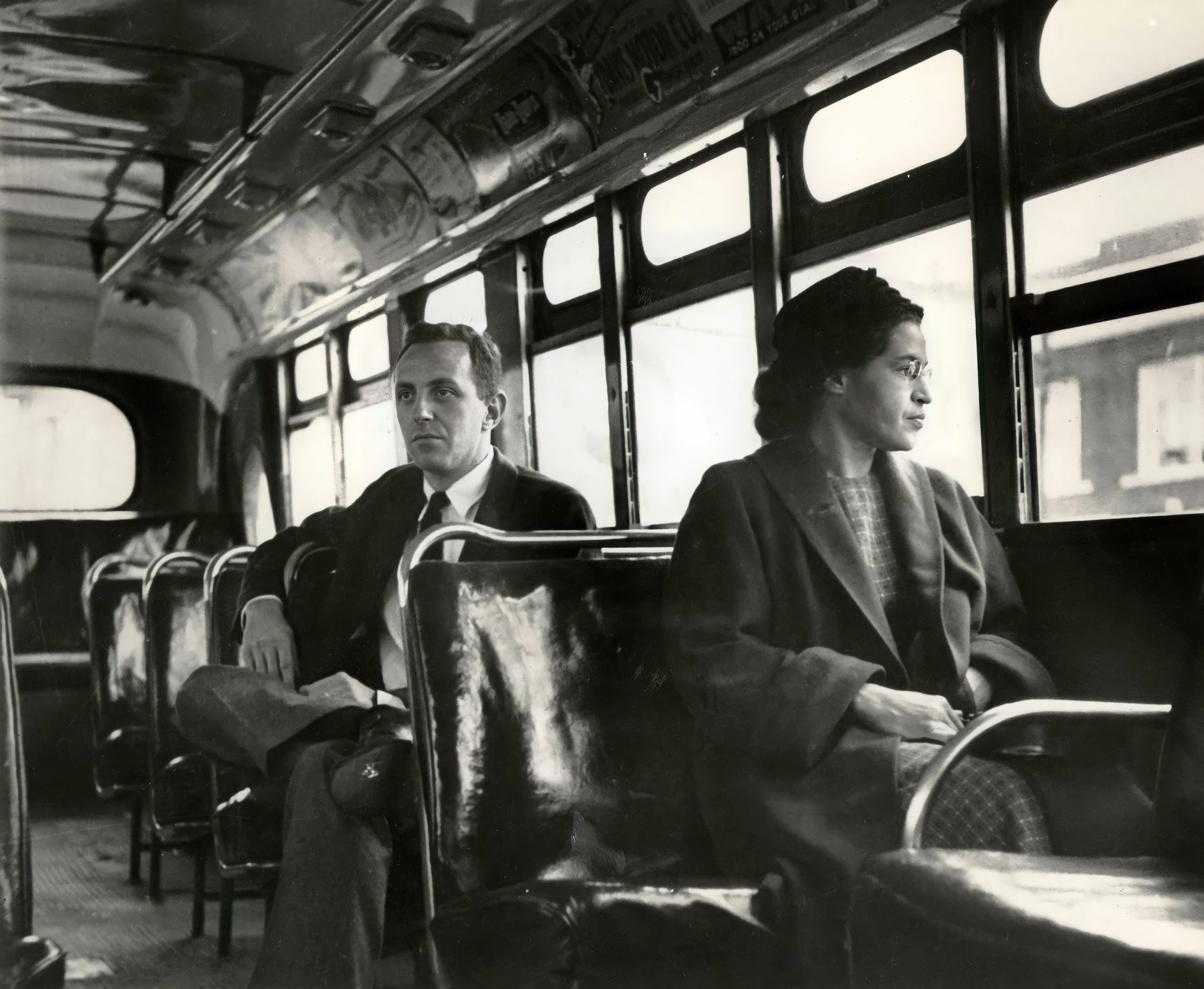
Rosa Parks: I was arrested on December 1, 1955 for refusing to stand up on the orders of the bus driver, after the white seats had been occupied in the front. And of course, I was not in the front of the bus as many people have written and spoken that I was — that I got on the bus and took the front seat, but I did not. I took a seat that was just back of where the white people were sitting, in fact, the last seat. A man was next to the window, and I took an aisle seat and there were two women across. We went on undisturbed until about the second or third stop when some white people boarded the bus and left one man standing. And when the driver noticed him standing, he told us to stand up and let him have those seats. He referred to them as front seats. And when the other three people — after some hesitancy — stood up, he wanted to know if I was going to stand up, and I told him I was not. And he told me he would have me arrested. And I told him he may do that. And of course, he did. Two policemen came on the bus and one asked me if the driver had told me to stand and I said, “Yes.” And he wanted to know why I didn’t stand, and I told him I didn’t think I should have to stand up. And then I asked him, why did they push us around? And he said, and I quote him, “I don’t know, but the law is the law and you are under arrest.” And with that, I got off the bus, under arrest.
Did they take you down to the police station?
Rosa Parks: Yes. A policeman wanted the driver to swear out a warrant, if he was willing, and he told him that he would sign a warrant when he finished his trip and delivered his passengers, and he would come straight down to the City Hall to sign a warrant against me.

Did he do that?
Rosa Parks: Yes, he did.

Did the public response begin immediately?
Rosa Parks: Actually, it began as soon as it was announced.
It was put in the paper that I had been arrested. Mr. E.D. Nixon was the legal redress chairman of the Montgomery branch of the NAACP, and he made a number of calls during the night, called a number of ministers. I was arrested on a Thursday evening, and on Friday evening is when they had the meeting at the Dexter Avenue Baptist Church, where Dr. Martin Luther King was the pastor. A number of citizens came, and I told them the story and from then on, it became news about my being arrested. My trial was December 5, when they found me guilty. The lawyers Fred Gray and Charles Langford, who represented me, filed an appeal and, of course, I didn’t pay any fine. We set a meeting at the Holt Street Baptist Church on the evening of December 5th, because December 5th was the day the people stayed off in large numbers and did not ride the bus. In fact, most of the buses, I think all of them were just about empty with the exception of maybe very, very few people. When they found out that one day’s protest had kept people off the bus, it came to a vote and unanimously, it was decided that they would not ride the buses anymore until changes for the better were made.

When you refused to stand up, did you have a sense of anger at having to do it?
Rosa Parks: I don’t remember feeling that anger, but I did feel determined to take this as an opportunity to let it be known that I did not want to be treated in that manner and that people have endured it far too long. However, I did not have at the moment of my arrest any idea of how the people would react. And since they reacted favorably, I was willing to go with that. We formed what was known as the Montgomery Improvement Association, on the afternoon of December 5th. Dr. Martin Luther King became very prominent in this movement, so he was chosen as a spokesman and the president of the Montgomery Improvement Association.

What are your thoughts when you look back on that time in your life. Any regrets?
As I look back on those days, it’s just like a dream. The only thing that bothered me was that we waited so long to make this protest and to let it be known wherever we go that all of us should be free and equal and have all opportunities that others should have.
What personal characteristics do you think are most important to accomplish something?
Rosa Parks: I think it’s important to believe in yourself and when you feel like you have the right idea, to stay with it. And of course, it all depends upon the cooperation of the people around. People were very cooperative in getting off the buses. And from that, of course, we went on to other things. I, along with Mrs. Field, who was here with me, organized the Rosa and Raymond Parks Institute for Self-Development. Raymond, my husband—he is now deceased—was another person who inspired me, because he believed in freedom and equality himself.

You were married during the bus incident.
Rosa Parks: Yes, I was.
How old were you?
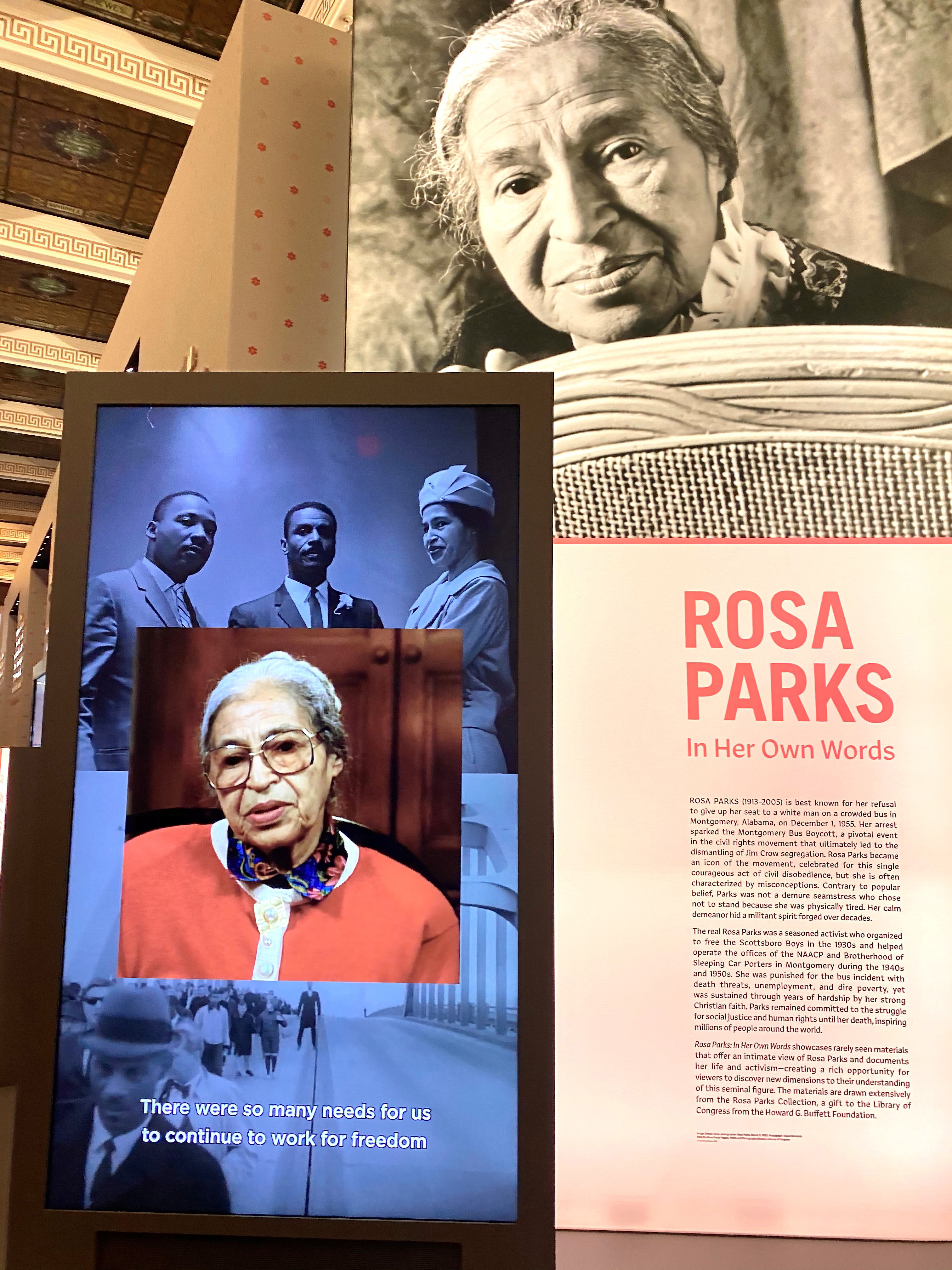
Rosa Parks: When I was arrested, I was 42 years old. There were so many needs for us to continue to work for freedom, because I didn’t think that we should have to be treated in the way we were, just for the sake of white supremacy, because it was designed to make them feel superior, and us feel inferior. That was the whole plan of racially enforced segregation.
What was it like in Montgomery when you were growing up?
Rosa Parks: Back in Montgomery during my growing up there, it was completely legally enforced racial segregation, and of course, I struggled against it for a long time. I felt that it was not right to be deprived of freedom when we were living in the Home of the Brave and Land of the Free. Of course, when I refused to stand up, on the orders of the bus driver, for a white passenger to take the seat, and I was not sitting in the front of the bus, as so many people have said, and neither was my feet hurting, as many people have said. But I made up my mind that I would not give in any longer to legally-imposed racial segregation and of course my arrest brought about the protests for more than a year. And in doing so, Dr. Martin Luther King became prominent because he was the leader of our protests along with many other people. And I’m very glad that this experience I had then brought about a movement that triggered across the United States and in other places.