
We cannot erect walls between the north and the south, between the rich and the poor.
Mohamed ElBaradei was born and raised in Cairo, Egypt. His attorney father, who headed the Egyptian Bar Association, often found himself at odds with the dictatorial regime of Egyptian President Gamal Abdel Nasser. Following in his father’s footsteps, young ElBaradei earned his law degree at the University of Cairo in 1962.
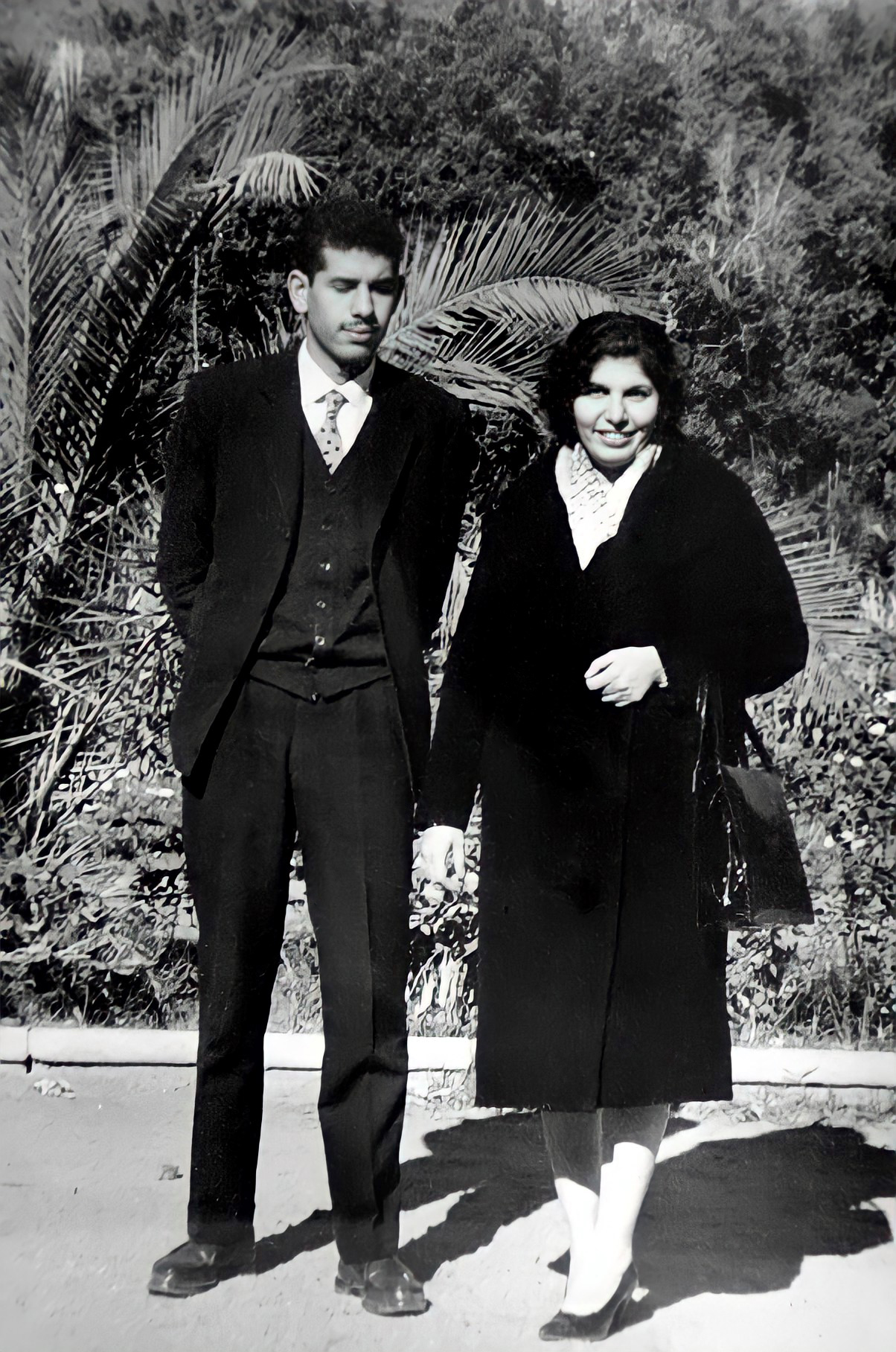
He joined Egypt’s diplomatic service in 1964, and was assigned to his country’s United Nations missions in New York and Geneva. He was placed in charge of political and legal matters and gained his first experience in arms control issues. While serving with Egypt’s UN mission, ElBaradei undertook studies at New York University School of Law, receiving a doctorate in International Law in 1974. He credits his years in New York City with broadening his worldview, teaching him to see the world in terms more global than nationalistic.
After completing his doctorate, he was appointed Special Assistant to the Foreign Minister of Egypt, a position he held until 1978. President Nasser’s successor, Anwar al-Sadat, broke the close ties to the Soviet Union that Nasser had cultivated. Instead, Sadat sought closer ties with the West and peace with Israel. ElBaradei served on the Egyptian negotiating team at the historic Camp David peace talks that led to Egypt’s peace treaty with Israel.
ElBaradei left the Egyptian diplomatic service in 1980 to work directly for the United Nations. He served first as a senior fellow in charge of the International Law Program at the UN Institute for Training and Research. From 1981 to 1987 he was also an Adjunct Professor of International Law at New York University. He was first assigned to the UN’s International Atomic Energy Agency (IAEA) in 1984, serving as a senior staff member of the IAEA Secretariat, as the agency’s Legal Advisor and later as Assistant Director General for External Relations.

In the wake of the 1991 Persian Gulf War, ElBaradei was sent to Iraq to uproot the country’s nuclear weapons program. His team blew up laboratories and pulverized equipment. In 1997, ElBaradei was chosen to succeed Hans Blix as Director General of the IAEA. The following year, Saddam Hussein expelled the weapons inspectors from his country. By then, ElBaradei was convinced they had destroyed Iraq’s entire nuclear weapons program, although the status of chemical and biological weapons remained more mysterious.

As Director General of IAEA, ElBaradei found himself embroiled in a second confrontation with Iraq. After terrorist attacks on New York and Washington on September 11, 2001, the United States insisted that Iraq comply with the UN weapons inspection regime. When IAEA inspectors returned to Iraq in 2002, they found no trace of the previous nuclear program. In a State of the Union address, U.S. President Bush asserted that Iraq was buying uranium in Africa. Several weeks elapsed before the U.S. presented the IAEA with a document, obtained in Italy, that purported to validate the allegation. IAEA investigators quickly identified the document as a forgery. ElBaradei dismissed the evidence before the UN Security Council.

Subsequent developments have suggested that ElBaradei’s evaluation of Iraq’s nuclear program was correct. ElBaradei recalled an appropriate proverb, “It’s dangerous to be proved wrong, but sometimes it’s even more dangerous to be proved right in the end.” It was rumored that the Bush administration opposed his reappointment to the IAEA. The Washington Post reported that his phone in Vienna was bugged by the CIA.
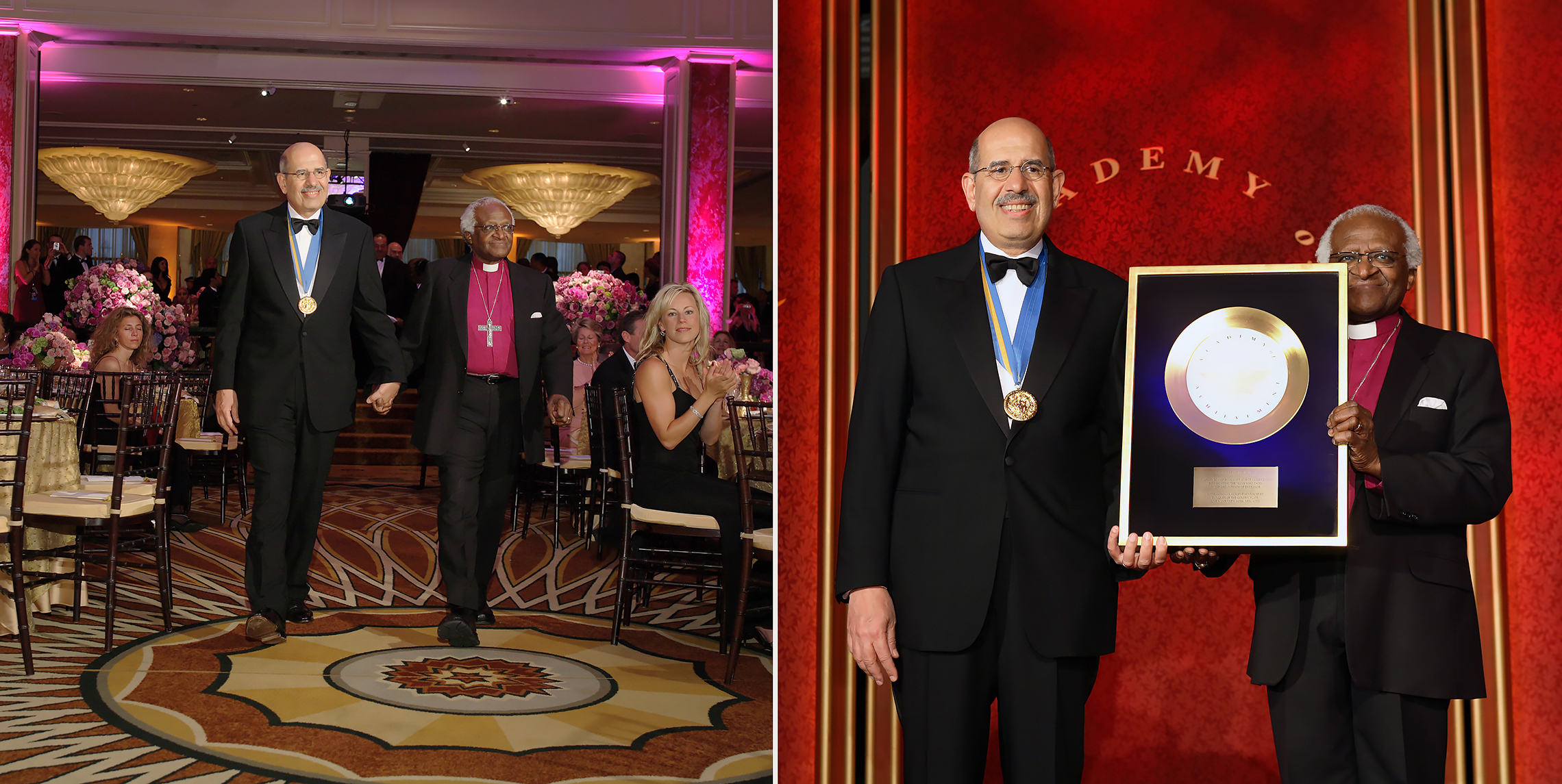
In 2005, ElBaradei and the agency he heads were awarded the Nobel Peace Prize for their efforts “to prevent nuclear energy from being used for military purposes and to ensure that nuclear energy for peaceful purposes is used in the safest possible way.”
Dr. ElBaradei served three terms as the Director General of the IAEA. As Director, ElBaradei was tasked with helping all member states of the UN to enjoy the benefits of progress in science and technology, while applying strict safeguards to ensure the peaceful use of nuclear energy. The agency’s first priority is to prevent the proliferation of nuclear weapons, by discouraging new nations from acquiring the weapons, while holding existing nuclear powers to their commitments to reduce their arsenals. During his time at the IAEA, ElBaradei called for a five-year worldwide moratorium on plans for new uranium enrichment and fission facilities, and pressed the existing nuclear powers to renounce their weapons for good. ElBaradei also made a priority of promoting the peaceful uses of nuclear power, striving to make radiation therapy available in less-developed countries for the treatment of diseases such as cancer and malaria.

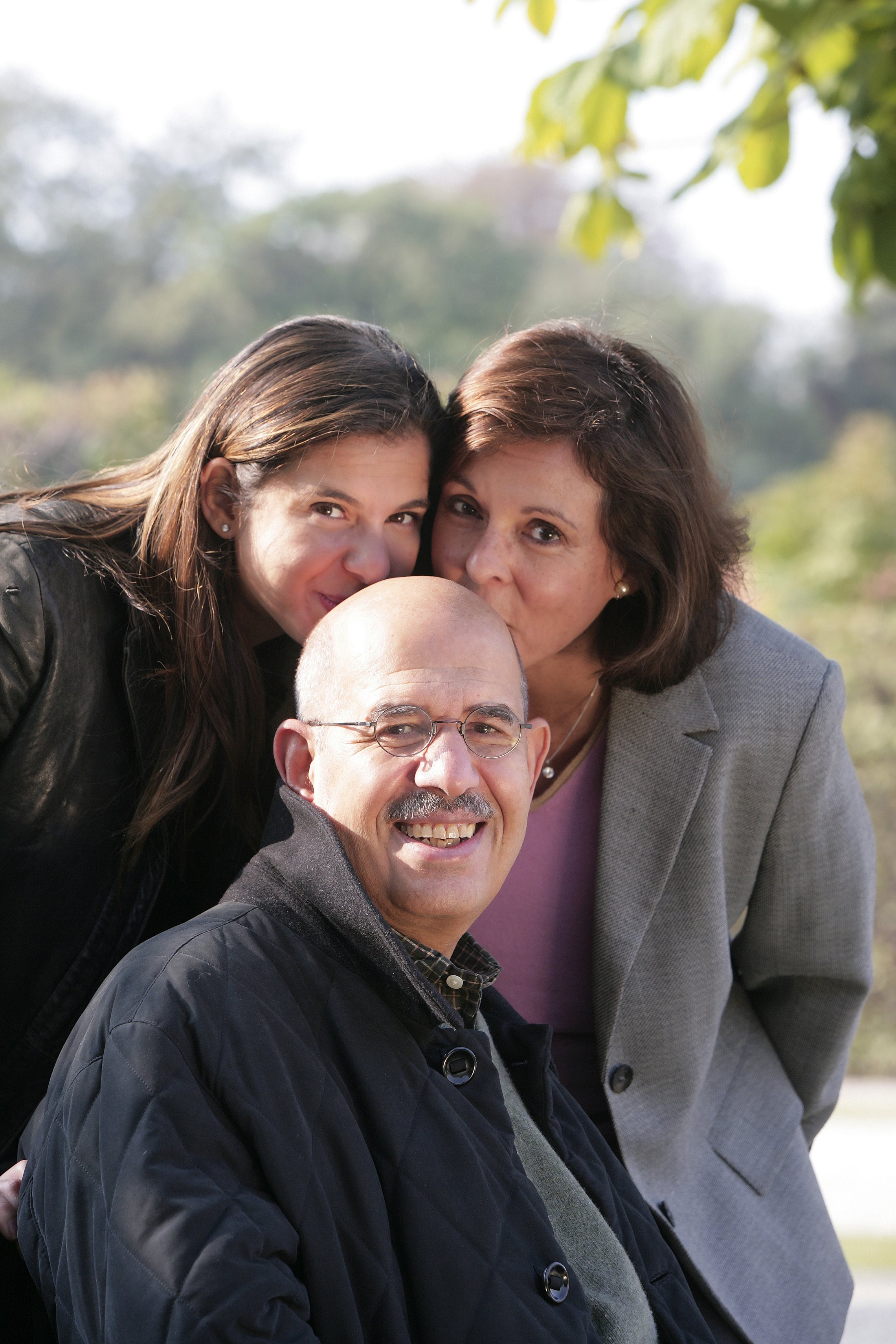
Mohamed ElBaradei is married to Aida Elkachef, an early childhood teacher. While he worked for the IAEA, they made their home in Vienna, Austria. They have two grown children who live and work in London, England. After 12 years as Director, Mohamed ElBaradei retired from IAEA, and maintains homes in both Cairo and Vienna. In 2010, he founded the National Association for Change, a non-partisan group that works for democratic reforms of Egypt’s electoral. ElBaradei himself has been widely seen as a potential presidential candidate. He attracted support from a broad spectrum of political parties and factions, but has indicated that he would not run for President of Egypt unless specific reforms were made to guarantee free elections. When the government of President Hosni Mubarak refused to negotiate with reform advocates, ElBaradei returned to self-imposed exile in Vienna.
In 2011, a wave of massive street demonstrations swept Egypt’s cities, calling for free elections and an end to the 30-year rule of President Hosni Mubarak. ElBaradei traveled to Cairo once more to join the demonstrators’ calls for democratic reform. After he and his fellow demonstrators were rebuffed with tear gas and water cannons, ElBaradei was not seen in public for several days. It was reported that he had been placed under house arrest, but he soon reappeared, defying a government curfew, and emerged as a leader of the democratic opposition. Mubarak resigned in February 2011 and was later sentenced to life imprisonment for his role in the killing of peaceful protesters.

Although Mohamed ElBaradei was urged by many to run for President of Egypt, he declined to compete in the 2012 presidential election. The winner in that contest, Muslim Brotherhood candidate Mohamed Morsi, antagonized large sections of Egyptian society. Following renewed street demonstrations, and violent clashes between pro- and anti-Morsi factions, the Egyptian military removed Morsi from office in July 2013. Adly Mansour, the chief of the country’s constitutional court, assumed the role of interim president until new elections could be held. Egyptian state media reported that Interim President Mansour had appointed ElBaradei to serve as Prime Minister, but the appointment was retracted, after Islamist members of the ruling coalition threatened to withdraw their support for Mansour. Instead, Mohamed ElBaradei was chosen to serve as Interim Vice President, with special responsibility for foreign policy. He was sworn into office on July 14, 2013. In office, ElBaradei attempted to broker a resolution to the conflict between Islamist supporters of former President Morsi and hardliners in the new government. When the government employed lethal force to disperse pro-Morsi demonstrators in Cairo, ElBaradei resigned in protest, exactly one month after taking office.

There is no more frightening issue in international relations today than the proliferation of nuclear weapons and the possibility that they will fall into the hands of aggressive dictators or terrorists. For 12 years, the man charged by the world community with averting this calamity was Dr. Mohamed ElBaradei.
An Egyptian diplomat with a doctorate in law from New York University, he was a member of the delegation that negotiated the peace settlement with Israel at Camp David in 1978. In 1991, he headed the UN inspection team that demolished Saddam Hussein’s nuclear weapons program. From 1997 to 2009, he served as Director General of the United Nations International Atomic Energy Agency (IAEA), founded 40 years earlier at the instigation of President Dwight Eisenhower.
From observing the opening of a radiation clinic in Ghana, to leading grueling negotiations with the leaders of North Korea or Iran, ElBaradei carried out his duties with patient resolve, and won the respect of the world. In 2005, the Nobel Prize committee honored Dr. ElBaradei and the agency he led for his courageous efforts “to prevent nuclear energy for being used for military purposes and to ensure that nuclear energy for peaceful purposes is used in the safest possible way.” After retiring from the UN, he returned to Egypt to lead a national movement for democratic reform. In 2013, he served as Vice President of Egypt in the interim government of Adly Mansour.
Your Nobel Prize for Peace was viewed in some quarters as a slap in the face to the President of the United States because of the way you had disagreed in recent years. Can you tell us how you heard about winning the Prize and what it has meant to you both personally and professionally?
Mohamed ElBaradei: Personally, of course, it was an absolutely great feeling, particularly that my wife and I knew about it from watching television. They usually call you half an hour before, to give you the good news, but in our case, they thought if they would call, the media would know about it before they formally announced it. So it was just an exhilarating experience. We were jumping for joy watching television. But in a more professional way, the timing was absolutely perfect. We were getting lots of criticism.
I was getting lots of criticism by being outspoken, by speaking “out of the box,” so to say, and I have been telling them then, I continue to tell them now, “I have no box. I have a job.” I know that it can make the difference between war and peace, and I owe it to the people — I owe it to the silent majority — to speak up on what I see is going wrong and how we can fix it.

So the Nobel Peace Prize was a shot in the arm for us. There’s no question. It gives us additional visibility. It gives us credibility, but it also gives us additional responsibility. There’s a lot of expectation that we can and we should move forward to the best of our ability. I keep trying to lower these expectations by telling people we are just one player. You know, “I can succeed if you help me.” That’s why, wherever I go, I say…
Civil society has a key role in helping me and helping my organization create a better security system, because in the past, civil society has always focused on trade, on environment, but they thought that security is too sophisticated, that it should be left to government. That is bogus to me. This is an issue that has to do with our survival, and every one of us has a special responsibility to send a powerful message to the government that we need a better system, so that we do not see millions of people dying every year in internal conflict or as a result of war. In the last decade, there are 11 million people who died in internal strifes. This, to me, are 11 million lives too many.
In Iraq, we have so far over 100,000 civilians who died — innocent civilians who died — during that war. This is to me, again, is 100,000 people too many. We still have 27,000 warheads. This is to me, 27,000 warheads too many. We need to think outside the box. People don’t like to be reminded of these realities, but these are realities. Many times I ask myself. We must have a better way to resolve our differences than through just killing each other.

You mentioned the toll on civilians in Iraq. Those are figures the U.S. government doesn’t talk about very often, but they can’t avoid the figures of 2,000-plus American soldiers. Can you talk about how the United States got into this war?
Mohamed ElBaradei: I grieve about every person who dies in war. I grieve about the 2,200 American soldiers who lost their life. I grieve about that. The Iraqi civilians. I grieve about the three million-some who died in the Congo War. I grieve about the 3,000-some who died in 9/11. These are all lives lost unnecessarily, and they could have stayed with us, and it’s a blot on our conscience. We need to understand that, before deciding to go to war, that we have exhausted every other possibility of reaching our differences through peaceful means.
Unfortunately, in the case of Iraq, I believe we could have done that through an inspection process. I was calling for a few months more to complete our work. We hadn’t seen indications of weapons of mass destruction. We hadn’t seen indications of nuclear weapons.

I remember, I asked the Security Council for three more months to complete my work. I said, “This is an investment in peace.” Unfortunately, it didn’t work that way. There was faulty intelligence. There were lots of other considerations that made a decision to go to war tempting, to get rid of Saddam Hussein.
Saddam Hussein was a dictator, a ruthless dictator. There’s no question about it, but I’m not sure that getting rid of every ruthless dictator around the world justified that we killed civilians. So there’s lots of lessons I think we are learning from Iraq, that one is we should not and could not jump the gun. We have to rely on absolutely factual information. We have to verify, authenticate our information before we go. A second lesson, that as long as we have no imminent threat, no clear and present danger, we should continue to dialogue, and that we also need to understand where people are coming from.
You know, we need to understand that a lot of these frustrations, a lot of these aggravations are feelings of a sense of humiliation.
I think I have come to realize that it’s not really poverty that drives people bananas. It’s really a sense of injustice. There’s a lot of poor people around the world, but when you repress the right of people to speak, when people fear that they are not being justly treated — and you see a lot of that in the Middle East, you see a lot of that in the Muslim world — I think people are getting it both ways. They are getting it from their government when they feel that they are repressed by their government — they are not allowed to have the right to live in freedom and dignity — and they are getting it from the outside world when they feel that the outside world is not fairly treating them. They wake up in the morning, and they see people dying in Iraq and Afghanistan, in the Palestinian territories. The sense of injustice, the sense of humiliation is very much there.
I visit there. I see that emotional anger. If we want to start a system of security, we really need to address more than the symptoms.
When we talk about terrorism, we cannot just say, “Let us use more force.” Force is not going to end that phenomenon. We need to understand why these people are feeling the way they are feeling. This is a long-term process. This sometimes goes beyond the term of any government whose interest-span goes up to their next round of elections. These are long-term processes that we need to endure. We need to go and understand the causes. Otherwise, it will be a flash fire somewhere. It will be, “Today is Iraq, tomorrow is Libya, after tomorrow is Iran.” But if we really want to avoid these temptations to develop weapons of mass destruction, we need to provide security for people, and as I said, we need the big boys to lead by example.
Any country who feels that they are threatened, or if they are craving power or influence, they would look at the guys who are playing in the major league, and the guys in the major league are saying, “We would like to keep our nuclear weapons because our nuclear weapons are very important for our security.”

You cannot say that and ask everybody else to give up nuclear weapons or other weapons of mass destruction. I used once the metaphor that you cannot continue to be a heavy smoker and dangle a cigarette from your mouth and tell your kids not to smoke. It doesn’t work.
You used the baseball analogy. The idea of getting into the major league is terribly seductive. As I hear you saying it, the only way to change that vision is for the people in the major leagues to say, “These bats and gloves aren’t really worth anything to us.”
Mohamed ElBaradei: Correct. Absolutely. These bats and gloves does not mean much to us. We do not want to need them in the future. We need, all of us, to be part of one league, where the rules of the game are the same for everybody.
What about Iran right now?
Mohamed ElBaradei: Iran is a very complicated issue. Iran is really about security in the Middle East.
The nuclear issue is the tip of the iceberg in Iran. It masked a lot of grievances from both sides, ranging from the hostage-taking in 1979 to the overthrow of the nationally elected government in Iran in the ’50s, the Mossadeq government. So there’s a lot of grievances that span over five, six decades, and the only way to resolve these issues of grievances, insecurities is just for all the parties to sit and talk together. I am delighted that now the U.S. have decided to go and talk to the Iranians directly, face to face, put all the issues on the table. That is the only way. I have been saying that for a couple of years. There is no other solution. There is no military solution, and there is no solution that is enduring which is not a negotiated solution. Talking to each other does not mean weaknesses. Talking to each other does not mean that you legitimize or de-legitimize a particular regime or you accept the records of human rights, none of that. Talking to each other means that we have differences, and we can only settle our differences through talking face to face.
So I am hopeful. I hope that dialogue will flourish, and I will continue to do my very best to make sure that I continue in my little way to undergird that process and make sure that it comes to fruition.

Do you think sanctions would be effective?
Mohamed ElBaradei: I don’t believe in sanctions. You can go through escalation. You can go through using sanctions, using pressure. It’s a process when both parties will hurt each other. We will go into a period of mutual hurting.
Sanctions didn’t work in the past, will not work in the future. In fact, it puts the hard-liners in both camps in the driver’s seat when you apply pressure. It’s the hard-liners who become popular. When you start dialogue, when you start to exchange ideas, goods, when people start to travel, when the Iranian people will continue to enjoy a new fleet of Boeing aircraft, when they start getting their new computer software, I think that is when you empower the silent majority in every country who are eager to have a decent life as part of the human community.
So the more we — the more we de-emphasize the muscle and the punching, and the more we emphasize the shared humanity, the incentives, the better off we are.