What brought you to this point? You’ve said that while you were still a child in London, you discovered a talent for sudden and abnormal athletic effort. How did you realize that you had this unusual gift?
Sir Roger Bannister: I was always a great bundle of energy. As a child, instead of walking, I would run. And so running, which is a pain to a lot of people, was always a pleasure to me because it was so easy. I wanted to have some success. I came from such a simple origin, without any great privilege, and I would say I also wanted to make a mark. It wasn’t, I suppose, until I was about 15 that I appeared in a race. I was playing rugby and the other games English school children do, and there was an event which was planned in which races were run, and I simply just won these by a considerable margin. So, everybody thought I was just rather special.
You were an athletic young person. Was running always going to be your sport? Were you interested in other sports or was it always going to be track?
Sir Roger Bannister: I did play other sports. In English schools you’re expected to, so I played rugby at school. I did a bit of rowing, but I didn’t have a real skill in ball games. I was adequate enough to be in some school teams, but running was really quite a separate skill and I enjoyed. With my impatience, I think I enjoyed running to get about more quickly, and I never found it any effort.
I was training myself when I went to school in Bath. I lived on the top of one hill and the school was at the top of another hill. Nobody ever went to school by car. We didn’t have any cars during the war. So that to and from school was itself a training, which you might think is now the equivalent of a Kenyan farmer who spends a lot of time, and when a child he has eight miles to go to school, and then as he grows up he looks after the herd. So, you know, my childhood was a vigorous one. Our concept of a family holiday was going to a guest house in the Lake District or Wales, where walking was part of the holiday.
How did your father and your mother react when you began to show an interest in running? Did they support your taking it so seriously?
Sir Roger Bannister: They were supportive, but at the time I was about to break a world record and become well known, my mother used to say, “Well, it is all very well, this running business, but I hope it doesn’t distract you from your work as a medical student.” So in other words, I got the impression that for her the only important thing was for me to become a doctor which as it were, was a career which had not been possible in her generation and in her society. So the values were career, medicine. Sport was something other, something to be set aside.
Some parents today seem to be obsessed with their children’s athletic performance. It sounds like you performed and achieved without that kind of obsessive attention from your parents.
Sir Roger Bannister: Yes, I was self-motivated, and driven to do the things as successfully as possible. So in relation to sport, I tried to do that as well as possible, but at the same time remained primarily a medical student with quite wide interests, which I’m sure was the result of my parental influence. Quite quickly, I decided I wanted to be a neurologist. That seemed to be the most difficult, the most intriguing, and the most important aspect of medicine, which had links with psychology, aggression, behavior, and human affairs. So that was my choice.
What were you like growing up? Could you give us a picture of yourself at about age ten? What were your passions and interests at that age?
Sir Roger Bannister: At age ten, the war was about to break out, and I was at a simple state school in a suburb of London. I had already shown some signs of being a rather speedy runner. My father worked in a government office, and with war breaking out, his office was thought to be important enough to be evacuated to Bath. So at age ten, I go to Bath. I go to quite a small school there, and try to make my mark at this school. I was involved in music, and some acting, and some running, but already my firm wish was to become a doctor. None of my immediate friends or associates were doctors, but I had a distant cousin who was a doctor. That was the formative age when I had decided on the pattern of my career.
What did your father and mother do?
Sir Roger Bannister: My father was the youngest of 11 children, and he came from a depressed area with awful unemployment. It is in Lancashire. Lancashire is the center of the cotton industry, but periodically there were grave slumps and people tried to build up businesses. Then there was an international dispute and American cotton didn’t come, so that the factories shut. Then there was the competition from Indian cotton and so on. My family actually lived in the same village for about 400 years. They had great stability until the last century. People lived and intermarried in small villages. Then young people, in a bicycling craze in the 1890s would cycle and meet other people and started to marry outside of the village and began to think, how can we escape from this environment in which there was going to be no employment? In order to get away from what was really not going to be a successful place to live, my father took an examination for the British Civil Service. They have nationwide competitive examinations, or they did then. He entered the clerical service, which was all he was able to qualify for. He came to London, so I was brought up in a suburb of London.
What about your mother? Did she work?
Sir Roger Bannister: No. Mothers, unless they were very poor, didn’t work. Both of my parents had to leave education, my mother actually had to work in a cotton mill because her father died, until 18 or 19, when she took some training in domestic science. So she was qualified to be a teacher, but she did not teach. She wanted to spend her life completing the education that she never had. So I grew up in a family in which books were read and education was extremely important.
How did the war intrude on the consciousness of a ten-year-old? Was it important to you, or were you able to have what we would consider a normal life except for the evacuation?
Sir Roger Bannister: Well, I’ve always been very impatient. At age ten I frankly found life in this suburb and at this school boring, and I can remember age nine having the awful thought, as it seems now looking back on it, “A war! That should liven things up a bit.”
So it was rather exciting actually.
Sir Roger Bannister: Yes. The first air raid siren sounded when I was still in London and I ran back from the park, where I’d been playing, home hearing this siren. Of course, nothing happened for six months. We had what we called the phony war. But when I went to Bath there was some reprisal bombing. Britain had started bombing Germany, so the Germans chose cities which were of no military consequence and Bath, of course, is a historic center, with lots of fine buildings from the 17th and 18th Century.
Our house was actually bombed, and the roof fell in. We were sitting under the stairs of the basement, and we were quite safe, but it brought home the realization. In two nights 400 people were killed in this relatively small town, so on the third night I persuaded my parents that we should leave. We went out of Bath and camped overnight about four miles away in a wood. My parents obviously agreed, but I wasn’t going to suffer another night.
It sounds like you were already very determined about what you thought was the right thing to do.
Sir Roger Bannister: Yes, I was determined sometimes to the point of riskiness. I wanted to go rowing on the River Severn near Bewdley, and the person who hired out the boats said, “No, it’s too rough.” You know, “It’s not safe to go out.” And I made such a pest of myself that my father said, “All right. You know, we will go out.” And it proved to be dangerous and frightening but that’s an instance of the determination I had to try to do things, and later on if there was any opportunity to climb a mountain, or to go ballooning, or some adventurous activity, I would always be keen to do it. And, it’s perhaps fortunate that nothing ever went wrong, but my discovery in Bath was of the countryside. I loved the countryside. I cycled, from the age of sort of 10 to 15, all around Bath and Somerset and Cheddar Gorge, and the sites of castles and country houses. And I remember that as a time of freedom, often perhaps a bit solitary, but great excitement of discovery and exploration.
Were you an only child?
Sir Roger Bannister: No, I have an older sister who was also living with us in Bath.
When did you first become serious about running? Was there a moment when you first became seriously interested?
Sir Roger Bannister: Running was something I wanted to do at school, so I became a champion at school. Then my father, when I was 16, took me to watch an athletic event. There are two parts to running. There is the simple enjoyment as you run through the countryside, a pure pleasure without any target. This meeting showed me a kind of forum in which success could be crystallized; those who were watching, applauded, and there was a gladiatorial interplay between the athletes. I watched an English runner called Sidney Wooderson, who had held the world record for the mile, and it had always been a British preoccupation to hold this mile record. There were a series of English runners who had held it. I watched him after the end of the war in 1945, running against the world record holders from Sweden, like Andersson. And, he was not in the same league, but he came up and challenged the world record holder on the last bend. The challenge was easily fought off by the Swede, but there was a feeling of courage that he showed in tackling the Swede, who looked physically much stronger, more elegant, and more powerful; Wooderson was a rather small man. But this exchange, this battle was, I think, the thing which led me to go on from simple running for pleasure to running with this target of records, Olympic Games and other events in mind.
Did you have a role model or a hero in medicine or in athletics when you were growing up?
Sir Roger Bannister: I read lots of books about medicine when I was 14, 15, 16 . I suppose Nobel laureates and Madame Curie and Pasteur were the role models, if you like, but I also had athletic ambitions and the role model for my athletic ambitions was Sidney Wooderson, who had held the world record for the mile just before the war. My father had never had a chance to become a runner, and although he didn’t make a great deal of it, he did take me at the to the White City stadium to watch this race in which Wooderson was running against the great Swedish runners. Wooderson didn’t win but it was inspiring to see this runner, much shorter than the Swedes, come up and challenge the Swedes, who had had all the benefits of peace time during the war: better food, no rationing. He challenged them and ran very movingly. That, if you like, was the moment when I said, “Well, that would be something I should like to do.”
Were your parents athletic at all? Did they show any talent for that?
Sir Roger Bannister: Athletics is a luxury. My father won the mile race at Cone Secondary School. He never did it afterwards, and never, as far as I was aware, directed me to do this. Perhaps when he took me to watch this meeting there was some idea in his mind, but he didn’t push me into it.
What is the physiology of a runner? Are there specific attributes of the body? Is this something that can be trained, or is it something innate in a certain kind of body?
Sir Roger Bannister: Essentially, muscles contain two sorts of fiber. They are called simply fast-twitch and slow-twitch fibers. And we have a mixture of them and that’s genetic. But you can, by training, alter the balance of some of the intermediate fibers, make more fast ones or make more slow ones, according to the training you do. So the sprinters have more fast-twitch fibers and concentrate on developing them. Distance runners have more slow-twitch fibers. And obviously I was born with more slow-twitch fibers, but the whole of my training was developing these fibers.
To move oxygen to the muscles is what enables them to release energy to run or anything else. If you are running for 20 seconds there is no time for any oxygen to get from the outside air through your lungs to the muscles. So you’re entirely dependent on what’s called anaerobic breakdown of energy without the presence of air and oxygen. That’s why you feel breathless at the end of it and you just cannot go at that speed for longer than 15 seconds.
These other fibers are very efficient. They contract more slowly but they can go on contracting because the air is provided. The mile requires about 50 percent of the energy to be anaerobic, 50 percent aerobic. So you’ve got a balance between the two, and that’s why it’s a fascinating race. You may see people sprinting at the end of it if they’ve got energy to do so. As the distance increases, the need for anaerobic fibers, fast twitch fibers, gets less and less.
I found longer races boring. I found the mile just perfect. But my introduction to track racing was through the background of enjoying cross-country running, which is not a sport perhaps as popular in America, in the United States, as it is in England. But cross-country running — steeple chasing is what it’s called informally — is very popular. I enjoyed doing that and I was quite good at that, but I wasn’t quite as good as I proved to be as a miler.
You wrote in your book that as a child in school you had some fear of not belonging unless you commanded some respect in athletics. Is that so?
Sir Roger Bannister: I think that is a universal adolescent feeling, trying to find your place. The adolescent who is perfectly adjusted to his environment, I’ve yet to meet. Now, with grandchildren who are going through adolescence, I see it so clearly. I was lonely in the sense that we lived in a suburban street and my parents — having come from Lancashire, which is the north of England — didn’t automatically fit in with the people who were southerners. I’ll put it that way, and they were quite self-contained people themselves. They were quite interested in self-improvement and education. So, I think I was perhaps set on this rather more lonely track. I didn’t have any difficulty finding and having friends. I suppose the real opening for me was passing into Oxford, which was then and still is, with Cambridge, our major universities with only a relatively small intake. There were competitive exams in order to achieve that.
My concentration was really on getting to university and becoming a doctor. Nothing deflected me from taking my work seriously. I think my parents let me know that they expected it of me, that school marks were important. They certainly laughed at jokes, but there was an underlying seriousness and purpose. Achievement was something which came by hard work. My father and my mother had not been to a university. In their generation, probably two or three percent of the population went to university. It’s now rising in this country, 40 percent, it may be even higher in the United States. So in order to go to university, as they had never been themselves, they assumed that it was a rather serious trial. If school studies were not taken seriously, then you were unlikely to get to university. That was a kind of watershed. You either go to university or you don’t. The object was to get to Oxford rather than other universities. That itself was quite a hurdle.
That must have looked like an outside chance. Did you see your plan fulfilling itself as you were going through school?
Sir Roger Bannister: I think so. In English schools you have a major examination when you are 14 or 15. I took it rather early, at 14, and I did do the best of my school in these examinations, so that was a good start. Because the war was ending, I managed to transfer to a more established school in London, which gave me a better chance of getting to Oxford. I was then being prepared for the leaving examinations, which are taken at 17 or 18. I was already accelerated, but I didn’t feel I was getting on with things. I was impatient, so I actually went to Cambridge when I was 16 for a scholarship examination. Very young. And they said, “Well, we’ll have you in a year’s time. Postpone it a year.” I was sufficiently impatient to then go to Oxford, and Oxford said, “We’ll take you straight away.” So that’s actually the reason why I went to Oxford rather than Cambridge.
So you started at Oxford at 16. What did you study?
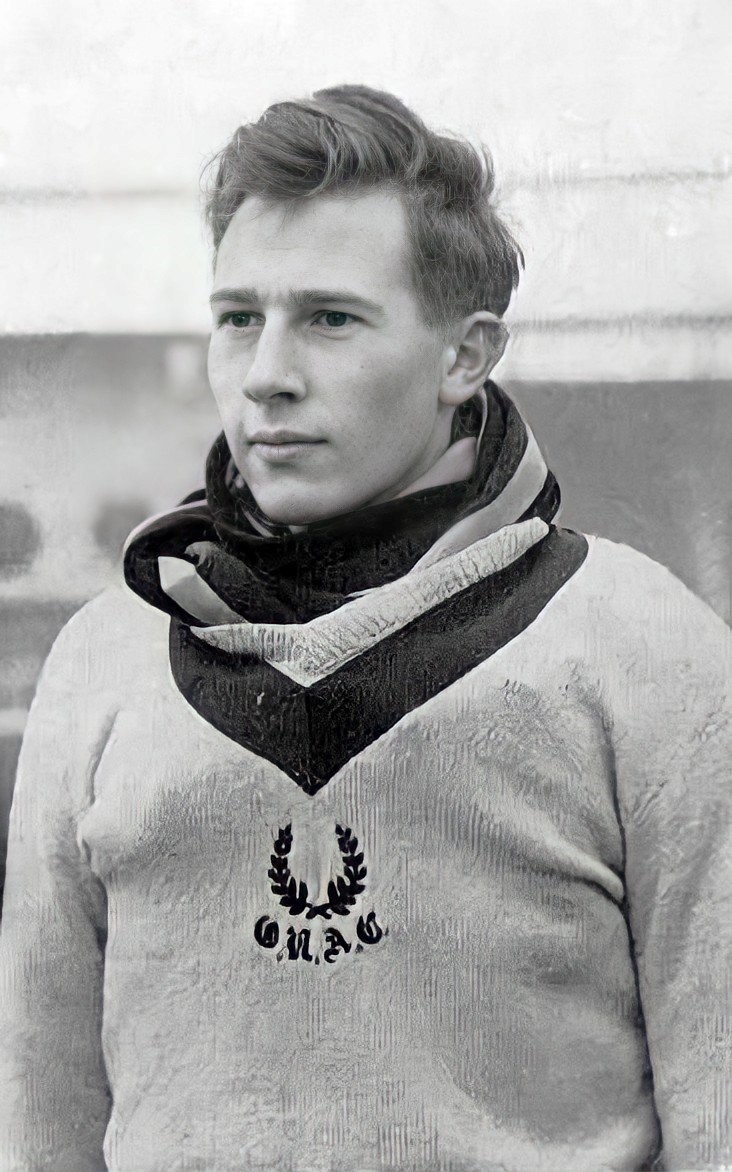
Sir Roger Bannister: Medicine, of course. I toyed, as most 16 or 17-year-olds do, with the idea of psychology, but I found that unsatisfactory. It was very experimental psychology, dealing with rats solving mazes, and matters of statistics. I turned quite swiftly into physiology, which had a firm basis, and I did a research degree after my ordinary degree, an M.Sc. degree in physiology of exercise and breathing. While I was in Oxford the medicine came first, but I also, as was not uncommon then, got what’s called my “Blue” for winning the mile race against Cambridge. I became president of the Athletic Club and was involved in building a new track. Students play a large part in the administration of sports in Oxford. I took a team of Oxford and Cambridge athletes to Harvard, Yale, Princeton and Cornell. I had my first exposure to the wonders of the United States, coming from an austere Britain to a luxurious United States.
About what time was this?
Sir Roger Bannister: This would be 1949. I have been coming back to the United States ever since, and later spent a year of training as a neurologist at Harvard.
How did you do as a group of young athletes in the United States in 1949?
Sir Roger Bannister: We didn’t win the heavy field events. We won some of the sprints, and we won the mile. So it was very interesting. A wonderful opportunity. You must remember, at that stage people had very rarely flown, and in a way one of the incentives to be a world athlete was that it gave me the freedom to travel. In those austerity days I think the amount that could be spent on foreign travel because our currencies were denuded after fighting the war, were 25 pounds. So, you can’t have much of a foreign holiday on 25 pounds. So really it was the entrée to world travel as an athlete which was most important.
It may be hard for young Europeans or Americans to imagine the austerity of postwar Britain. What were the limitations? When you were at Oxford was money scarce ? Were things unavailable?
Sir Roger Bannister: Oh yes. We had a ration of cheese and meat and so on. We took into breakfast in the college our own rations on a little plate. It was quite serious. I mean, winning a war, America and Britain and so on, winning the World War, it was a very difficult time and the government of the day chose to tax heavily in order to start social services, but decided to keep on these restrictions, and they went on for nine years after the war. But I think if you are young, and I didn’t come from an affluent home, I was never really expecting affluence. I mean, food was very simple. I can’t remember — people didn’t go out to meals and so on, and restaurants, you know. Life was very simple. My parents had come from the North of England, which is a fairly rugged, bleak, hard-working part of England, and so there was not the expectation of luxury.
What was it like, for a young man of your background, finally entering Oxford? How did it feel?
Sir Roger Bannister: I went up at the age of 17, was much younger than most. This provided another reason why I wanted to run because only ten percent of the places in Oxford in 1946 were open to students from school because there was a backlog of five years of ex-servicemen who deserved places and from their scholastic record would have gained places, but they went to the war. Some of those, of course, never returned from the war. They were killed. Some of them were wounded and disabled. But there was I, an innocent, fresh-faced youth of 17, coming to terms with these ex-servicemen. They were kind to us. They didn’t rub in the privations and sufferings that they had gone through. But if some of us school boys were able to show some abilities in areas in which we were competing against them, then they had a sudden respect for us. So, I think that was the additional motivation.
Was your athleticism a means of social acceptance?
Sir Roger Bannister: I would say that my athleticism was really the core to social acceptance, because in those days the overwhelming number of students came from more of a public school background than I did. I actually arrived in Oxford in 1946, when a large number of ex-servicemen came back. They had deferred entry to university in order to fight during the war. So there were only a few of us, perhaps 10 percent of us, with awards, who were accepted for medicine to come up and be integrated into this group of men. They were almost exclusively men; there were women’s colleges but they were only a fifth of the total of Oxford. We were alongside veterans who wore medals and had been injured. Some of them had been promoted to senior ranks by of losses on the battlefield. So it was a very strange time. We had nothing in common with them except sport, and if we happened to be good at sport then they would pay a little more attention. They were very kind, they never made us feel inferior in that sense.
So there was the social situation, to which I had to make a fairly major adjustment. Money was tight, but I also had to make the sporting adjustment. It would not have been true in rowing, in which you had to be bigger and heavier and stronger. It wouldn’t have been true in rugby, but in athletics it was possible to be recognized. I was even made president of the club, although I was probably one of the youngest members of the club. That really opened up so many doors and made me feel much more at ease, having duties such as fall on a president of a club, traveling with them and helping to organize events. Eventually we rebuilt an old three-lap-to-the-mile trail in Oxford. So all these things happened and made Oxford a wonderful turning point. Irrespective of the firm basis of scientific medicine which it gave me, it changed my life totally.
Oxford was an intriguing place. You had a whole range of talents of people who were trying to be good at things. Kenneth Tynan was acting. There were politicians like Rhys Morgan, and others who were debating. Everybody took part in sport then, except a few dilettantes who abhorred exercise, or pretended to. The academic programs were organized so that there weren’t fixed lectures in the afternoons. As a medical student, we had more classes and lectures than other people. But Oxford has a series of 25 different colleges, and in the afternoons each college would have teams for every sport and they would compete in inter-college for cups and prizes.
You did about a four-and-a-half minute mile in one of your first races at university in 1947, didn’t you?
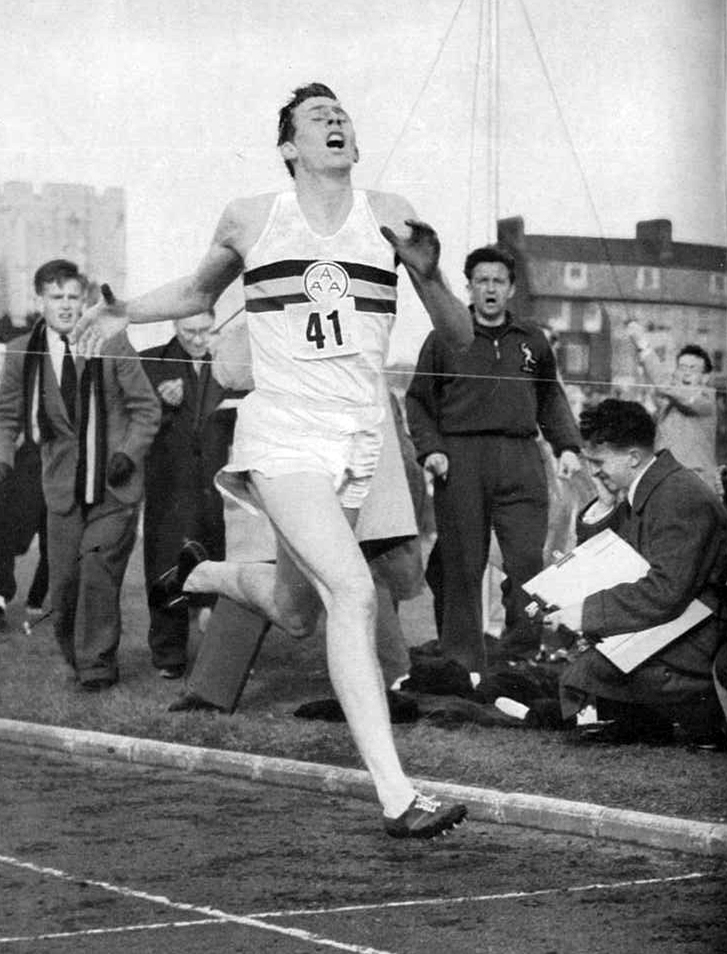
Sir Roger Bannister: To everybody’s surprise, I was put in a team. It was a dreadful winter in 1947. Historically, there’s never been a winter like it since. The track was frozen. They couldn’t have trials. So, I couldn’t prove that I could be in the team. My previous best time was about five minutes. You know, won a freshman’s race. But, I had been seen shoveling away the snow rather vigorously. So the captain — and sport is entirely run by students in Oxford — the captain said, “Well look, just as a third string.” That means the third runner who is not expected to do anything. “Why don’t we put him in?” And they put me in. Then on the race itself, I just overtook all the rest of the field and won, which at the time was 30 seconds faster than I had done before, but very modest of course, four and a half minutes. That was the beginning of an eight-year process in which every year I improved and then after eight years I was near the world record. And, then on the eighth year, broke it. I had qualified as a doctor six weeks later. I tidied up one or two other races. My record was broken by an Australian, John Landy. Then John Landy and I had to compete head-to-head in what was then called the Empire Games, when we still had a bit of an empire. That is now the Commonwealth games. I then defeated him. So my honor was satisfied. I had another European race and then retired and never ran again competitively.
Was that a natural process? Had you assumed very early on that you would continue?
Sir Roger Bannister: I received a scholarship to stay in Oxford, and there was a possibility of my becoming a physiologist or scientist, but I didn’t think my mathematics was good enough. I already wanted to be a neurologist; that was the area of medicine in which I was most interested. I had decided to go to London to do the clinical work. So I left in 1951, and then spent three years at St. Mary’s Hospital medical school, which was the medical school where Fleming discovered penicillin, Chain and Florey in Oxford were part of the development eventually, but still it was a well known medical school. And it so happened that there was a runner who had been there who had come from the same college in Oxford. He was a Rhodes Scholar called Jack Lovelock, and he won the Berlin Olympic 1,500 meter race by a wide margin. So he was someone who proved to be a role model.
The amount of time that goes into preparation for medicine is famous, infamous. The amount of time it takes to train to be a great athlete of record breaking proportions is also infamous. How did you find the time to maintain both ?
Sir Roger Bannister: I must be the international athlete who trained least. In other words, I had worked out from my knowledge of physiology what was the minimum amount of training that would be needed to continue to improve year by year and every year, I suppose, I would be reducing my mile best time by two or three seconds, you know, starting 4:18 and then gradually, gradually coming down. And basically I was doing interval training. I had so many other interests that I wanted to have my evenings free and I would usually miss lunch and sometimes there were rather unimportant lectures at 12 o’clock.
For example, I knew I wasn’t going to be an obstetrician, and there were certain areas of medicine which could be reduced to formulae. You know, “There are six complications of this condition…” and once you had mastered that, it was not too difficult where you had to deliver some babies and things. So I would tend to take about two hours off to travel to a track, spend about 35 minutes running, but running very hard and then just have a shower, didn’t warm up, didn’t warm down, had a shower, would get something to eat and get back to the hospital by two o’clock. So that was really the pattern for several years with, of course, intervals for traveling to matches and team. So, it was a major incursion into my medical studies, and I think that — although I passed all my examinations the first time and so on — I did not pay as much attention in depth to clinical medicine as I had to my physiology. But in the long-term, I simply had to catch up after qualifying by studying for the various higher exams which our specialist physicians and neurologists need to do.
It sounds like you were quite a reasonable young man. You had a number of ambitions. You wanted to achieve in both of them, and you sorted out what was practical to manage your life.
Sir Roger Bannister: Yes. My main interest was to lead a happy social life, to catch up, if you like, on the areas of friendship and interaction, which had not been part of my early childhood, which was why I had been bored as a child. Then, as someone who was nationally and internationally known, there were all kinds of opportunities to meet people and to do broadcasts and to engage in the facets of life which had never really been within my ken a few years earlier.
Very often athletes or other really driven young people don’t take that opportunity to enjoy the broader perspective.
Sir Roger Bannister: The broader perspective was really what appealed to me. Having to train once a day was a price I had to pay for the entry to a wonderful world. England being a smaller country and so many people living in London, the stage and music and acting and writing all seemed part of the scene. It was a scene in which I wanted to become involved, because it was part of the most exciting learning process. All my life I’ve wanted to go on learning.
In 1947, you ran the mile in a minute and a half, 4:30.8. At that point, did you think about breaking the four-minute mile?
Sir Roger Bannister: Well, it was talked about. There was one journalist who said eventually the four-minute mile will be broken, and everybody thought it was a pretty eccentric view, because there was a long way to go. But to me, at that stage, I was only looking ahead to becoming an international. I was immediately involved in the management of the Oxford athletics, became the Secretary and then the President. I declined the invitation to compete in the London Olympics. In those days, I didn’t train very much. We didn’t really know how to train in modern terms. There was this thing called “burning yourself out.” I didn’t want to burn myself out at 18, and I had a notion that if I looked after myself, trained carefully, I would go on improving, not by training two to three hours a day, but by training three quarters of an hour a day. It seemed to me logical that you could go on improving, and you didn’t have to spend all day running.
You didn’t have a coach? Is that right?
Sir Roger Bannister: There was a coach, but I fell out with him. He said, “You do this.” And I said, “Why do I do this?” He said, “Well, you do this because I’m the coach and I tell you to do it.” He’d make me do a timed trial and he would be holding a watch and I would say, “What time did I do?” He would say, “Oh, don’t worry about that.” So, although he had been quite well known — he was actually the coach to someone called, Jack Lovelock who won the Olympic 1500 meters in Berlin in 1936 — but I suppose I was always independent. I felt about running that it was my task to find out what suited me and what didn’t suit me, how much training could I do and then improve my performance, and not let my performance go down because I was training too hard. These were things which seemed to me so individual that nobody else was going to understand me to this degree.
What was the name of the coach?
Sir Roger Bannister: His name was Burt Thomas. He had a waistcoat, a suit and a bowler hat. Really archaic. If you are doing a technical event like high jumping, or hurdling, putting the shot, you have to have a coach. We had coaches. But in Oxford it was actually the most senior athlete whose job it was to teach the others. It was as informal as that. Later it became more professional. That was the reason why I pursued a rather lonely furrow.
I made the decision that I wouldn’t compete in the Olympic Games and I reached a position in which I was being criticized in the press for not racing often enough. They said, “Here’s this chap. We think he’s good. We want to see him.” I said, “Well, no. I run if I want to run. There is nobody paying me to run. If I think that five races a year is the right for me, and if I feel that I’ll work up towards a peak in the middle of the season, that’s what I’m going to do.” I pursued this kind of approach with a lot of press criticism, and eventually they said, “If he wins the gold medal in Helsinki in 1952, he will be right. He’s done the right thing.”
Just three weeks before the Helsinki Olympics — the management of the events in the Olympic Games was left to local — Helsinki in this case — organizers. It was said afterwards that there had been a rather deliberate attempt because I was the favorite, to change the program. They had three races on three successive days, which were unnecessary. Previous there had always been the heats, a day’s rest or two day’s rest, and a final. And that was what I was planning for and I could have coped with it. But by the third day of these successive races, I knew in my heart that it was a virtually impossible task for me. Of course, with that frame of mind too, it did prove impossible. I came fourth. No British gold medals in the Helsinki Olympics except for a horse called Fox Hunter who won an equestrian event. Disaster! Criticism for Bannister. “We told him he should train differently and now it is proved.” If I had won the gold medal, I would probably have retired because Olympic gold medals, 1500 meters, there was nothing higher and I would just have gone on with my work. But, I felt angry with the press, angry at myself, angry with the organizers of the event and thought about it. I knew that I could go on for two more years when the equivalent of an Olympic prize would have been the European championships and the Commonwealth games. That would have meant most of the great runners, not unfortunately, the American runners. The rest of the world would have been represented. So after thought, I decided it would be possible to work and go on training. It proved difficult.
Did that that defeat help? Was it an inspiration in some ways?
Sir Roger Bannister: Yes, I’m sure it was. I think that an adverse experience is very formative. It’s painful. You are very young, and you are projected on television around the world, when most people looking at it have no idea what the risks are of not winning. I chose athletics partly because there was fewer attendant risks of not winning than there are in other sports. You are dependent on yourself, which removed one element of doubt. Most other sports are based on chance. Their attraction is that you really don’t know who is going to win.
Yours was as public a defeat as one can imagine. Most teenagers and people in their early 20s don’t have their early failures blasted all over the world news.
Sir Roger Bannister: It’s a defeat and a kind of humiliation. I had to get over it and prove to myself, if not to other people, that that was not the best I could do.
You were very well versed in the makeup of the human body. What’s the connection between that and your feat, if there is one? When you broke the record you were already very close to getting your medical degree.
Sir Roger Bannister: Yes, six weeks later. I had a common sense knowledge about what was needed. As a scientist, and I was a physiologist and did some research before I went on to my clinical training, trial and error. That’s what science is. To me, running was an experiment. Here were muscles. Here was a heart. Here were lungs. To what extent can this bit of machinery be trained to do a very specific, skilled task? I knew that the training had to fit the event. How do you manage to release physical and nervous energy over four minutes? Running marathons wasn’t going to help. Running seven miles wasn’t going to help. So that was really the only part in which my medical training helped me. It was a matter of applying logic to the problem.
They say pitching is largely in the mind. It’s a very interesting paradox that what seems to the world to be the athletic feat of the century is also a very logical, rational, well-thought-out, not just physical, feat. All sporting events are more mental than physical. You have to train the physical aspects for years. But eventually, even in the more complex movements, which have my respect, those who can pitch and bat or play golf and so on, the basis of it is laid down in the brain and the real question is whether the brain can be allowed to do its bit without being interfered with by psychological factors. The other aspect of the brain is that it must be positive. I suppose these two are connected. But, the brain has to have some overall image of what is being achieved. I did have the feeling that — in a sense — looking down on myself doing it. I mean being outside of my body in some kind of way. I think this experience has been described by others.
People spoke about the four-minute mile as a metaphor for how we can push through barriers and limitations. Did you realize at the time how significant it had been?
Sir Roger Bannister: I really didn’t. I regarded it as something which was rather personal. It was British. We were patriotic. An English and European and Australian and New Zealand team, really an Empire team, had climbed Everest the year before. I actually had an attempt the year before, just before the coronation, in the comparable May meeting. It was just a feel it was conceivable. But I ran in 4 minutes, 3.8 seconds. So, it took another year for me to improve and get the pacing right.
When you retired from running, it sounds very calm and very definite. Was it difficult?
Sir Roger Bannister: No, because I was set for it. My core, my whole life was medicine. I wanted to become a specialist. So for ten years I concentrated solely on medicine. It took ten years to become a consultant in neurology. I had a spell in the army, which was necessary then. Fifteen years later, I was asked to be the chairman of the British Sports Council. That has really been the pattern since. Alongside my neurology, I have always had some public involvement in sports and sports promotion.
Immediately after I retired I was a resident. I had married by then, and started having a family. I remember that my salary was 800 pounds a year in residency, with deductions for laundry. So I was fortunate enough to be able to write. I wrote regularly for a leading newspaper, the Sunday Times, mainly on sport, and went to the Olympics, and also wrote regularly for Sports Illustrated, whose first edition was brought out on the occasion of my race against John Landy in Vancouver in the Empire Games
I wrote a book, to get off my chest a number of ideas about what running could mean for people who needed to find something for themselves in adolescence, something which gave them a feeling that life was moving forwards and not backwards. I wrote the book in about six weeks, and the book was well received, but that was the end of my running career. Of course, I came back later to do government work encouraging sports for others but…
Now I had to sink to the bottom of the pile, graduating as a medical student, and I had to do my residencies, and it was a very difficult time in which I had to turn down all the engagements, work for these further exams, catching up on things that I had not been diligent enough to pursue earlier. And my colleagues and my teachers, of course, had some difficulties in dealing with me because I was famous, notorious, infamous, whichever phrase you like to use. And the concept that I could also have a serious career — and indeed in a very highly competitive field like neurology — was really rather strange to them. There were those who supported me, but I certainly felt I was being examined rather carefully and had to be more careful than others to start writing medical papers and pass the exams as speedily as I could, and select the appointments.
There’s something quite individual about the way somebody specializing tries to work at particular hospitals with particular individuals in order to increase his experience in the clinical field. We are now talking of clinical medicine, looking after patients, trying to find some area within the field you have chosen where there is a possible advance to be made.
That is essentially what young clinical neurologists are attempting to do. I had to spend two years in the army, which I managed to distort in my favor by using my physiological background to find out why unacclimatized troops were dying in the Middle East. We had a problem in Aden after the Suez crisis. That was a partial distraction, but I wrote some papers about heat illness, all the time trying to make the best of what opportunities were presented. This takes me through a visit to Harvard for a year to get further training.
At the age of 33 I was appointed a consultant at two major London hospitals. In those days, neurology being a super specialty in a small country, the patients that weren’t acutely sick would be sent to London.
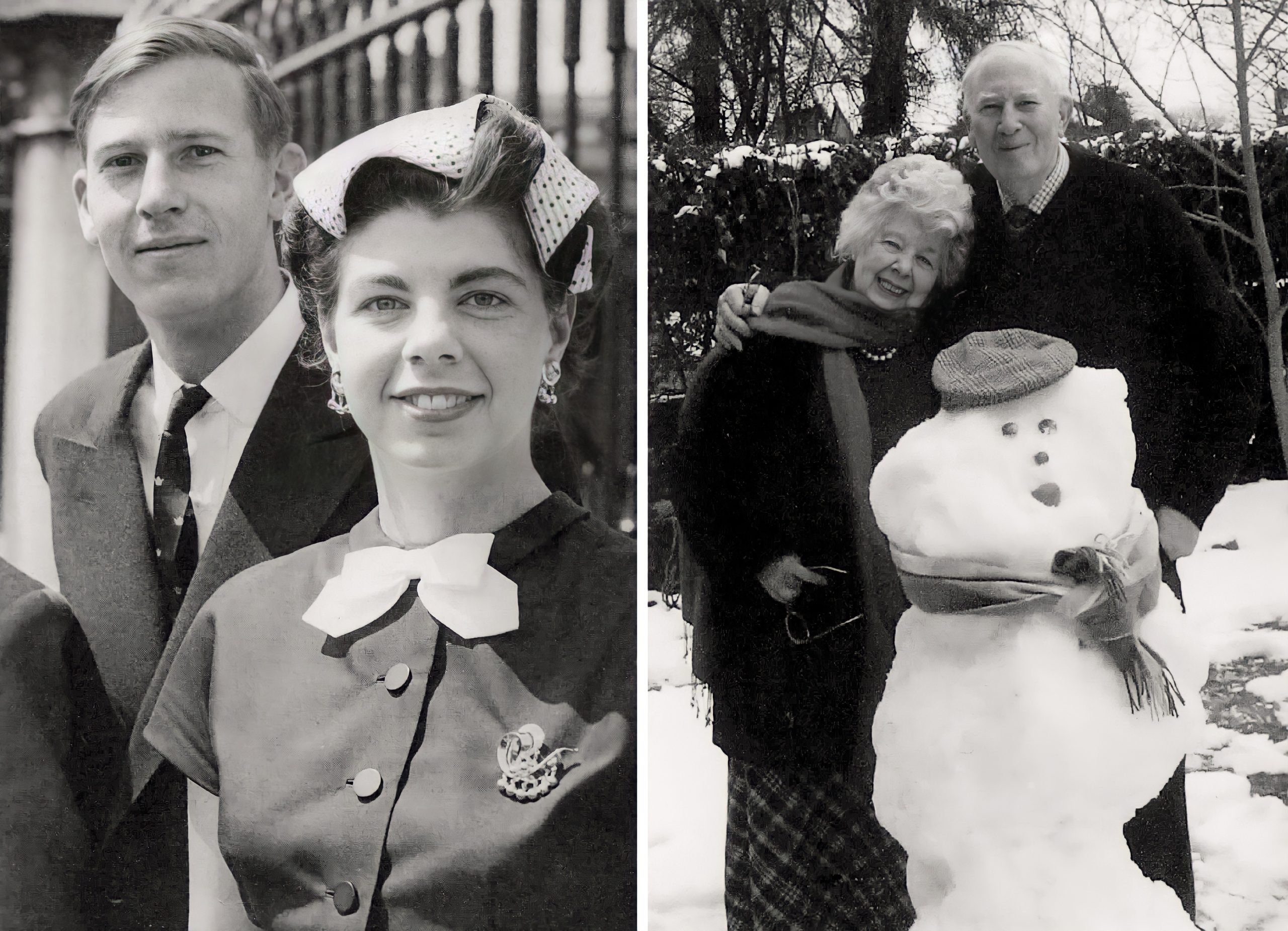
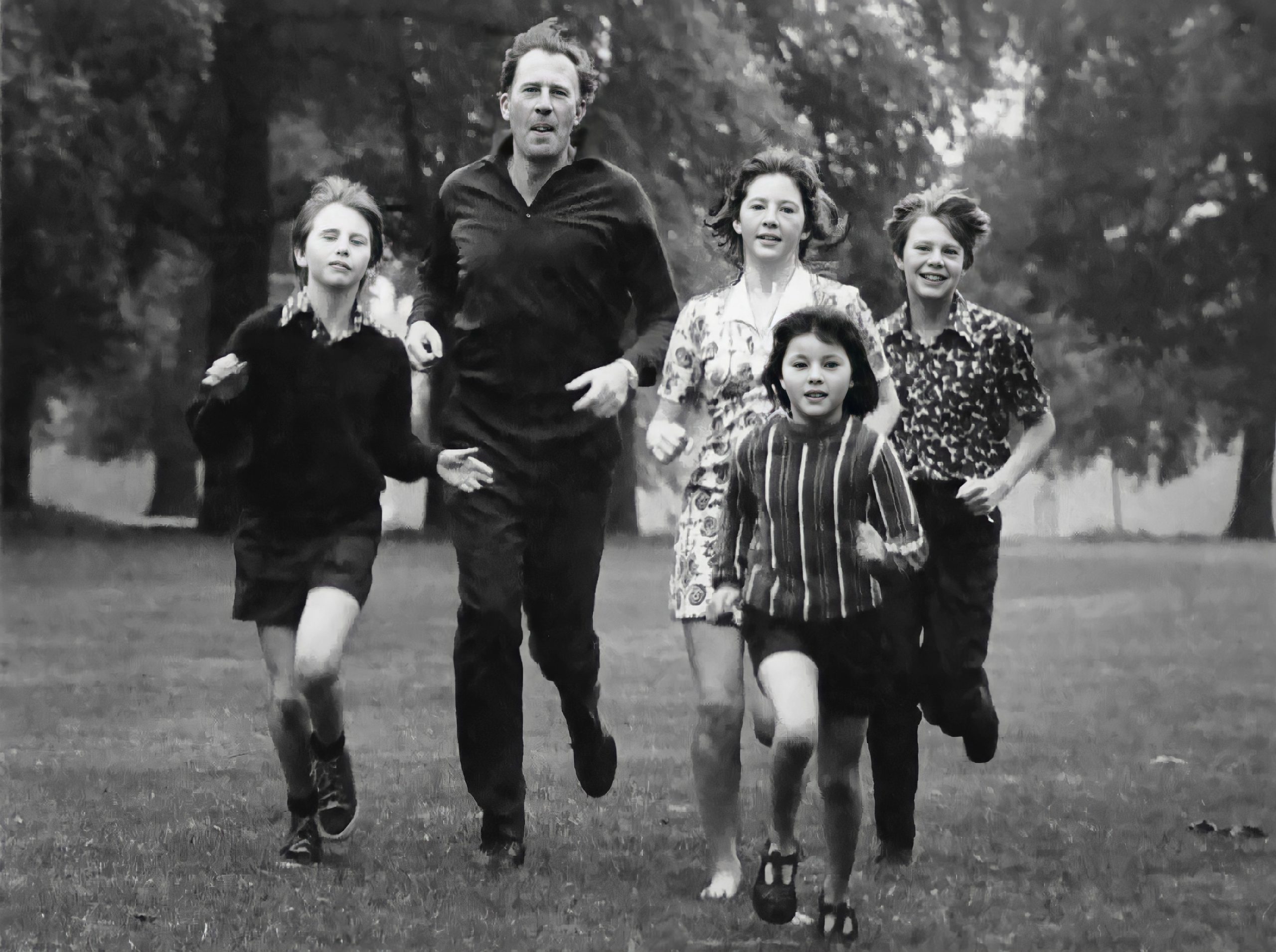
The most important point I should make is that after retiring from the track I got married in 1955 and we started to have a family. My wife had three children by the time we went to America. So this was a time of consolidation, family life which I could only share to a limited extent because I was still doing my residency appointments. My children remember me working on holidays, when I’d accepted the editorship of a neurological textbook.
Those were years of very hard work, but very happy years because my life was expanding through my wife and my family. She had to work very hard and we turned down invitations all the time, which was rather frustrating, and it would not have been possible if she had not been able to take over that whole side of family life.
Without making a false analogy between sports and scientific research, did you find yourself applying some of the athletic mentality to the pursuit of your goals as a medical scientist?
Sir Roger Bannister: Well, sport is simple. It’s black and white. It’s very limited. Medicine is complex. Indescribably difficult. It involves collaboration. There aren’t lonely peaks. I mean, there are Nobel Laureates who work on one particular subject in isolation and are so clever that they are able to perceive what others cannot. And I was, of course, not that kind of a scientist, and clinical medicine is not like that, and I knew this. I knew it, and I chose it, because I felt that the capacity to apply yourself to be alert to new developments, and to be prepared to spend the time writing papers, would lead to a fascinating life in which a reputation would be created for hard work, for — one hopes — kindness and effectiveness in dealing with patients and clinical problems, and then ultimately the kind of problems of organizing medical committees and having a responsibility thrust upon one by colleagues who wished one to undertake particular duties of this kind.
Gradually, administration begins to come into the equation, but after a car accident when I was 45 — which I had quite severe injuries — it wasn’t my fault, but there we are. I was badly injured and I had a time to rethink. And I was then getting too busy in too many directions. I was being asked to see more private patients and so on, and I made the conscious decision then that I wouldn’t do any more private practice and there was already an area of research, the autonomic nervous system, which was relatively neglected. It was between cardiology and neurology, and these areas in between are often the province of neither specialty, and so can lag behind. And that was the area I chose and this changed the second half of my life, if you like, because I then set up a laboratory.
At that stage there were no methods of testing for diseases of the autonomic nervous system. We saw all kinds of patients who might have these kinds of diseases and created a battery of tests. At the same time, the method of assaying chemicals like noradrenaline that are released by nerve endings were being developed, so one had a direct biochemical way of measuring the activity of this system. I developed it with colleagues in London at the same time that NIH in Bethesda were also doing it. I was near the leading edge, and set up Autonomic Research Society. Now there are similar research societies in the United States and other countries. At this time I was traveling very widely and speaking at medical conferences on these areas, and I wrote the first textbook on diseases of the autonomic nervous system. It’s now in its fourth edition.
You returned to Oxford as Master of Pembroke College. Were you at Pembroke as an undergraduate?
Sir Roger Bannister: No, I hadn’t, but if you’ve been in Oxford you understand the place. There are 30 different colleges and they all work in rather similar ways. They have their points of interest and fame; Pembroke College happened to be the college of Dr. Samuel Johnson.
Could you tell us about your activity with the Sports Council?
Sir Roger Bannister: In Britain the government have always been interested in the public’s attention to recreation, going back 50 or 60 years. It’s thought to be part of a full life. And yet the general population have not had the opportunity to take part in sport. There are very few swimming pools and sport centers. So a Sports Council was set up in 1964, and I was a member of that original council to remedy these defects. I became the chairman when it was given independence like our Arts Council. This is a kind of public involvement which does not exist in the United States. After I served my term as chairman, I chaired some committees to look at problems like whether university students had the opportunity to take part in sports. We started a campaign called Sport for All. That was a slogan but it drew attention to the fact that sports should not be the province of any small group and we weren’t concerned as much with Olympic gold medals as with the opportunities for all. That has continued to be a very important part of my life. In a way it may be of more long-term significance than anything else.
If everyone has a chance, then those who have particular skills, may be more likely to burst their way through, through their ambition and hard work. I remembered this from my own youth. This process has continued. We have just had the Olympic Games in Sydney and for a small country we have been surprisingly successful. It’s not being jingoistic to want your country to do well.
There is another aspect that I am very worried about: the corruption which has followed professionalism and the abuse of drugs. When I was chairman of this Sports Council we set up the first testing program for anabolic steroids, still the testing that’s used, but there are other drugs that have come along. The International Olympic Committee and other world bodies have not been as diligent as they should have been in trying to keep the testing up-to-date. It has been bad news for them and for their organizations and their sponsorships. I feel strongly about that.
Sir Roger, thank you very much for speaking with us.
You’re welcome.